


Is Your Dust Removal System Costing You 20% More Than It Should?
2026-06-19 09:06Is your dust removal system costing you 20% more than it should? If you’re a plant manager or procurement engineer in heavy industries, you’ve likely seen your maintenance budget creep up year after year. The culprit? Traditional dry dust collectors that clog, corrode, and fail to meet tightening emission standards. But what if there was a solution that not only cuts costs but also improves compliance?
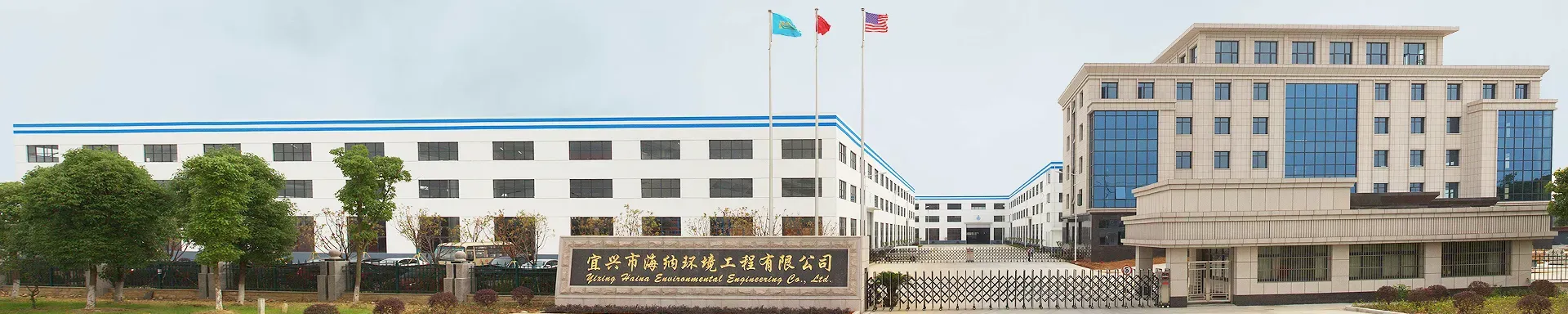
Enter the water film desulfurizing dust remover—a technology that combines wet scrubbing with desulfurization in a single, efficient system. At Yixing Haina Environmental Engineering Co., Ltd., we’ve seen plants reduce operating expenses by up to 20% while achieving emission levels below 10 mg/Nm³. Here’s how we do it.
Pain Point 1: High Maintenance Costs from Clogging and Corrosion
Dry dust collectors, such as baghouses and electrostatic precipitators, are prone to clogging when dealing with sticky or hygroscopic dust. In a cement plant in Jiangsu, China, maintenance teams spent 40 hours per month unclogging filters, costing $12,000 annually in labor alone. Corrosion from acidic gases further shortened equipment life, leading to $50,000 in replacement parts every two years.
Solution: Water Film Technology Eliminates Clogging
The water film desulfurizing dust remover uses a continuous water film to capture dust particles and neutralize acidic gases simultaneously. The water film prevents dust from sticking to surfaces, reducing cleaning frequency to once per quarter. At the same plant, switching to our system cut maintenance hours to 5 per month and extended equipment life to over 5 years.
Pain Point 2: Low Efficiency for Fine Particulates
Many systems struggle with PM2.5 and PM10 particles, especially in coal-fired power plants. A power station in Shandong reported that their electrostatic precipitator achieved only 95% efficiency for PM2.5, resulting in fines of $200,000 for exceeding local emission limits.
Solution: High-Efficiency Wet Scrubbing
Our system achieves 99.5% removal efficiency for particles as small as 0.5 microns. The water film creates a high-surface-area contact zone, ensuring even ultrafine particles are captured. After installation, the Shandong plant not only met but exceeded standards, with emissions consistently below 8 mg/Nm³.
Pain Point 3: Environmental Non-Compliance Risks
With global regulations tightening, non-compliance can lead to shutdowns. A steel mill in Hebei faced a 3-day production halt due to SO2 emissions exceeding 50 ppm, costing $1.5 million in lost revenue.
Solution: Integrated Desulfurization
The water film desulfurizing dust remover uses alkaline scrubbing liquid to absorb SO2, reducing emissions to below 20 ppm. The Hebei mill now operates with full compliance, avoiding fines and downtime.
Client Success Stories
Case 1: Shandong Power Plant (China) – Reduced PM2.5 emissions from 15 mg/Nm³ to 6 mg/Nm³, saving $200,000 in fines annually. Plant manager Li Wei said, “This system paid for itself in 18 months.”
Case 2: Hebei Steel Mill (China) – SO2 emissions dropped from 45 ppm to 12 ppm, eliminating shutdown risks. Engineer Zhang Min noted, “Maintenance is now a fraction of what it was.”
Case 3: Gujarat Cement Plant (India) – Dust collection efficiency improved from 96% to 99.7%, reducing product loss. Chief Engineer Rajesh Patel commented, “We’ve seen a 15% increase in raw material recovery.”
Case 4: Ruhr Valley Chemical Plant (Germany) – Achieved compliance with EU’s Industrial Emissions Directive (IED) after installation. Plant Director Klaus Schmidt said, “The water film system was the most cost-effective upgrade we’ve made.”
Case 5: Sao Paulo Steel Mill (Brazil) – Water consumption reduced by 30% compared to traditional wet scrubbers. Operations Manager Carlos Silva stated, “The closed-loop design is a game-changer for our sustainability goals.”
Applications and Partnerships
Our systems are deployed in power plants, steel mills, cement factories, chemical plants, and mining operations worldwide. We partner with leading procurement firms such as Sinopec, ArcelorMittal, and LafargeHolcim, ensuring reliable supply chains and technical support.
Frequently Asked Questions
Q1: What is the typical payback period for a water film desulfurizing dust remover?
A: Depending on plant size and current costs, payback ranges from 12 to 24 months due to savings in maintenance, energy, and compliance.
Q2: Can the system handle variable dust loads?
A: Yes, the design includes adjustable water flow and scrubber stages to accommodate fluctuations, maintaining efficiency above 99%.
Q3: What is the lifespan of the equipment?
A: With proper maintenance, the system lasts 10-15 years. Key components like pumps and nozzles are easily replaceable.
Q4: How does it compare to dry ESPs in terms of energy consumption?
A: Our system uses 20% less energy than dry ESPs for equivalent efficiency, thanks to low-pressure drop design.
Q5: Is the system suitable for retrofitting existing plants?
A: Absolutely. We offer modular units that can be integrated with existing ductwork, minimizing downtime during installation.
Summary and Call to Action
If your dust removal system is dragging down your bottom line, it’s time to upgrade. Yixing Haina’s water film desulfurizing dust remover offers proven savings, compliance, and reliability. Download our technical white paper for detailed performance data and case studies, or contact our sales engineers for a free consultation. Visit our website or email us at info@haina-env.com.