


Is Your Sodium-Based Wet Desulfurization Tower Costing You Millions?
2026-09-25 09:06Imagine this: It's 3 a.m., and your phone rings. The night shift supervisor reports that the sodium-based wet desulfurization tower is down again. The SO₂ emissions are spiking, and the production line has to be halted. You're losing $50,000 per hour. This isn't just a headache—it's a recurring nightmare that many plant managers face. But what if I told you that the root cause isn't the technology itself, but how it's designed, operated, and maintained? In this blog, we'll dive deep into the world of sodium-based wet desulfurization towers, uncover the hidden pitfalls, and show you how to turn your system from a cost center into a reliable, efficient asset. Stick with me, and by the end, you'll have a clear roadmap to slash downtime, reduce chemical consumption, and extend equipment life.
The Pain Points: Where Sodium-Based Wet Desulfurization Towers Fail
Let's be honest: sodium-based wet desulfurization is a proven technology. It's effective, relatively simple, and widely used in industries like steel, coking, and glass manufacturing. But too many operators struggle with the same issues. Here are three that keep engineers up at night.
1. Scaling and Blockage: The Silent Efficiency Killer
You've probably seen it: white deposits forming on the tower walls, nozzles clogging, and pressure drop creeping up. That's scaling, and it's often caused by sodium sulfate and sodium sulfite crystallizing out of solution. When scaling takes hold, your desulfurization efficiency drops, sometimes from 95% to 80% or lower. The consequences? You burn more sodium hydroxide to compensate, your energy costs skyrocket, and eventually, you have to shut down for manual cleaning. A typical 100,000 m³/h system might lose $200,000 annually in extra chemicals and downtime. And the cleaning itself? It's labor-intensive, hazardous, and takes days.
2. High Sodium Consumption: The Budget Black Hole
Sodium hydroxide or sodium carbonate isn't cheap. If your tower is guzzling more than 1.2 tons of NaOH per ton of SO₂ removed, you're bleeding money. Why does this happen? Poor gas-liquid contact, inadequate pH control, or excessive oxidation of sulfite to sulfate. Each 0.1 increase in the stoichiometric ratio can add tens of thousands of dollars to your annual operating budget. Worse, inconsistent dosing leads to pH swings that damage equipment and reduce reliability.
3. Corrosion and Material Degradation: The Hidden Time Bomb
Sodium-based solutions are inherently corrosive, especially when chlorides are present. Carbon steel towers often show pitting within 2-3 years, and even 316L stainless steel can suffer stress corrosion cracking in high-chloride environments. When a tower leaks, you're facing unplanned outages, environmental fines, and potential safety incidents. Replacing a tower section can cost upwards of $500,000, not to mention the production losses. I've seen plants where corrosion forced a complete rebuild after just five years—a nightmare that could have been avoided.
The Solutions: Engineering Your Way to Reliability
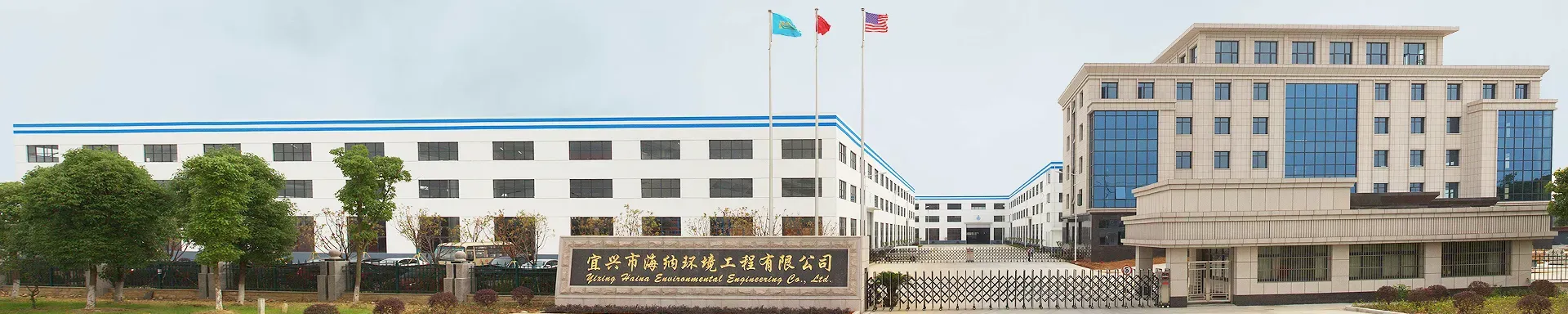
Now that we've identified the culprits, let's talk about how to fix them. At Yixing Haina Environmental Engineering Co., Ltd., we've spent over two decades tackling these exact challenges. Our approach combines smart design, precise chemistry, and robust materials. Here's how we address each pain point.
1. Defeating Scaling with Advanced Internals and Control
Scaling isn't inevitable. It starts with proper tower design. We use computational fluid dynamics (CFD) to optimize gas distribution and ensure uniform liquid coverage. Our proprietary nozzle arrangement prevents dead zones where crystals can form. But design alone isn't enough—you need real-time control. We integrate online monitoring of pH, density, and oxidation-reduction potential (ORP) to keep the solution in the sweet spot. For example, maintaining pH between 5.5 and 6.5 minimizes scaling while maximizing SO₂ absorption. We also recommend periodic addition of scale inhibitors, but only when needed, based on actual saturation indices. With these measures, our clients typically see scaling-related downtime reduced by 80%.
2. Slashing Sodium Consumption Through Process Optimization
High sodium consumption is often a symptom of poor mass transfer. We address this by using high-efficiency packings or trays that increase contact area and residence time. Our towers achieve 98%+ desulfurization efficiency with a stoichiometric ratio as low as 1.02—significantly lower than the industry average of 1.1-1.2. How? By precisely controlling the pH and using oxidation inhibitors to prevent sulfite conversion. We also recover sodium via crystallization when feasible, turning waste into a saleable byproduct. One client reduced their NaOH consumption by 35%, saving over $300,000 per year.
3. Conquering Corrosion with Smart Material Selection
Corrosion resistance isn't just about choosing the most expensive alloy. It's about matching materials to the specific chemistry. For chloride-rich environments, we use duplex stainless steel 2205 or even higher-grade alloys like 904L for critical components. But we also employ non-metallic solutions: fiberglass-reinforced plastic (FRP) for the tower shell and corrosion-resistant linings for carbon steel. Our engineers conduct a thorough water analysis to predict corrosion rates and recommend the optimal material combination. The result? Towers that last 15+ years with minimal maintenance.
Real-World Success: Case Studies from the Field
Don't just take my word for it. Here are three examples of how we've helped clients across different regions and industries.
Case Study 1: Steel Plant in Hebei, China
A major steel manufacturer in Hebei was struggling with frequent scaling in their sodium-based wet desulfurization tower. The system, handling 500,000 m³/h of flue gas, required monthly shutdowns for cleaning, costing $150,000 each time. After our team redesigned the internals and installed an advanced control system, scaling virtually disappeared. The plant now operates continuously for over a year without cleaning. "Yixing Haina's solution paid for itself in six months," says Mr. Zhang, the plant manager. "We've cut downtime by 90% and reduced sodium consumption by 25%."
Case Study 2: Glass Manufacturer in Shandong, China
A glass producer in Shandong faced high sodium hydroxide costs due to inefficient absorption. Their tower was using 1.5 tons of NaOH per ton of SO₂ removed. We conducted a full audit and identified excessive oxidation as the main culprit. By installing our oxidation inhibition system and optimizing the packing, we brought the ratio down to 1.05. "Our annual chemical savings are over $400,000," reports Ms. Li, the procurement director. "The system is more stable, and we're meeting emissions limits consistently."
Case Study 3: Chemical Plant in Jiangsu, China
A chemical plant in Jiangsu had a tower that was severely corroded after only four years. The chloride content in their flue gas was high, and the original carbon steel construction couldn't handle it. We replaced the tower with a duplex stainless steel 2205 design and added a pre-scrubber to remove chlorides. The new tower has been running for seven years with no signs of corrosion. "We wish we had come to Yixing Haina earlier," says the plant's chief engineer. "The new tower is rock-solid, and maintenance costs have dropped by 70%."
Case Study 4: Coke Oven Plant in Shanxi, China
A coke oven plant in Shanxi was facing environmental fines due to frequent exceedances of SO₂ limits. Their existing sodium-based tower was undersized and poorly controlled. We supplied a new tower with a capacity of 300,000 m³/h, featuring our advanced control system. Since commissioning, the plant has not had a single exceedance. "The system is incredibly reliable," says Mr. Wang, the environmental manager. "We've also reduced our sodium consumption by 30%, which is a huge win for our budget."
Case Study 5: Power Plant in Inner Mongolia, China
A power plant in Inner Mongolia needed to upgrade their desulfurization system to meet stricter emission standards. They chose Yixing Haina's sodium-based wet desulfurization tower after a competitive tender. The new system achieves 99% removal efficiency and has been running flawlessly for three years. "The collaboration with Yixing Haina was seamless," says the project manager. "Their engineers were on-site for commissioning and training, ensuring our team could operate the system optimally."
Applications and Partnerships: Trusted Across Industries
Sodium-based wet desulfurization towers are versatile and can be found in a wide range of applications. We've supplied systems for:
- Steel and iron sintering: Handling high volumes of flue gas with varying SO₂ concentrations.
- Coking plants: Dealing with complex gas compositions and stringent emission limits.
- Glass furnaces: Managing high temperatures and corrosive compounds.
- Chemical plants: Adapting to diverse chemical environments.
- Power plants: Meeting ultra-low emission standards.
- Waste incineration: Controlling acidic gases and heavy metals.
Our clients include some of the largest industrial groups in China, such as Baowu Steel, China National Building Material Group, and Sinopec. We also partner with international engineering firms to provide customized solutions. For example, we collaborated with a European EPC contractor on a project in Southeast Asia, delivering a turnkey desulfurization system that exceeded performance guarantees. These partnerships are built on trust, technical excellence, and a shared commitment to environmental sustainability.
FAQ: What Engineers and Procurement Managers Really Ask
We've compiled the most common questions we hear from technical teams and decision-makers. If you have a question not covered here, feel free to reach out.
1. What is the typical lifespan of a sodium-based wet desulfurization tower?
With proper design and maintenance, a tower can last 15-20 years. However, lifespan heavily depends on material selection and operating conditions. For example, carbon steel towers in chloride-rich environments may fail in 5 years, while duplex stainless steel towers can exceed 20 years. We recommend conducting a corrosion risk assessment during the design phase to choose the right materials.
2. How can I reduce sodium hydroxide consumption without sacrificing efficiency?
Start by optimizing your pH control. Maintaining pH between 5.5 and 6.5 reduces the formation of sodium sulfate and minimizes NaOH demand. Also, consider installing an oxidation inhibition system to prevent sulfite conversion. Regular monitoring of the stoichiometric ratio and adjusting the liquid-to-gas ratio can also help. In some cases, adding a pre-scrubber to remove chlorides can reduce chemical consumption.
3. What are the key factors in preventing scaling?
Scaling is primarily caused by supersaturation of sodium sulfate and sulfite. To prevent it, ensure proper gas distribution, avoid dead zones, and maintain the solution concentration below saturation. Using scale inhibitors can help, but they should be applied based on real-time saturation indices. Our towers incorporate CFD-optimized internals and online monitoring to keep scaling at bay.
4. Can I retrofit an existing tower to improve performance?
Absolutely. Many of our projects involve retrofitting existing towers. Common upgrades include replacing packings with high-efficiency designs, installing advanced control systems, and upgrading materials in critical areas. A retrofit can often achieve 20-30% improvement in efficiency and significant reductions in operating costs. We start with a thorough audit to identify bottlenecks.
5. What is the lead time for a new tower, and what support do you provide?
Lead time varies based on size and complexity, typically 4-6 months for a standard tower. We provide full support from design to commissioning, including on-site training for your operators. Our team also offers remote monitoring and periodic maintenance services to ensure optimal performance throughout the tower's life.
Conclusion: Don't Let Your Tower Drain Your Profits
Sodium-based wet desulfurization towers are critical for meeting emissions regulations and maintaining sustainable operations. But without the right design, materials, and control strategies, they can become a major financial burden. By addressing scaling, sodium consumption, and corrosion head-on, you can transform your system into a reliable, cost-effective asset. At Yixing Haina Environmental Engineering Co., Ltd., we've helped hundreds of clients achieve exactly that. Whether you're building a new tower or upgrading an existing one, our team of experts is ready to help. For a more in-depth technical analysis, download our white paper "Optimizing Sodium-Based Wet Desulfurization: A Comprehensive Guide." Or, if you'd like to discuss your specific application, contact our sales engineers today. Let's work together to keep your tower running smoothly—and your budget in the black.