


Why Multi-tubular Dust Collectors?
2026-10-23 09:06Why Multi-tubular Dust Collectors? If you’ve ever walked through a foundry or a metalworking shop at shift change, you know the scene: a fine haze hangs in the air, the floor feels gritty, and the maintenance crew is already gearing up for another filter change. It’s a familiar frustration—one that costs time, money, and sometimes more. The answer to the title question is straightforward: multi-tubular dust collectors deliver high-efficiency filtration in a compact, modular design that outperforms conventional baghouses and cartridge units in space-constrained, high-temperature, or abrasive-dust environments. In this blog, we’ll unpack why that matters, backed by real engineering logic and field-proven results.
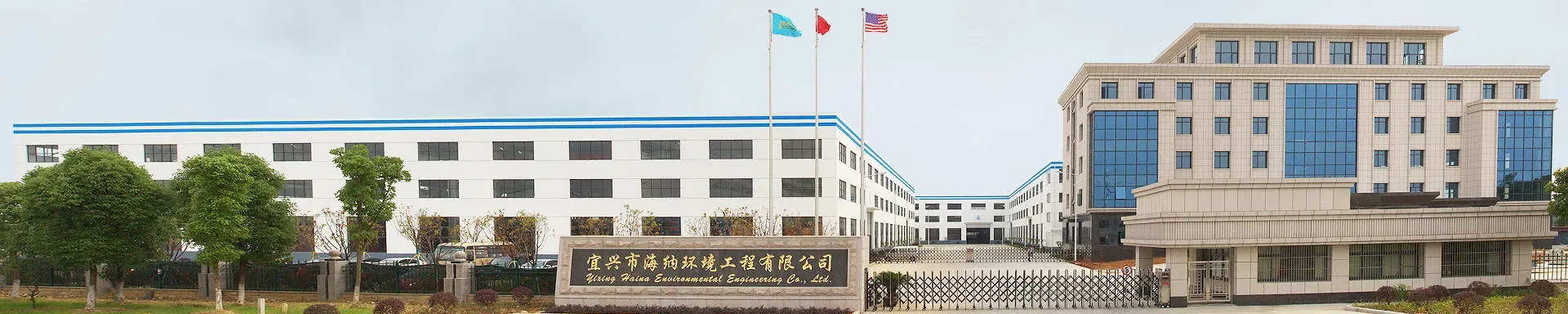
At Yixing Haina Environmental Engineering Co., Ltd, we’ve spent over two decades designing and manufacturing multi-tubular dust collectors for industries that can’t afford to compromise on air quality or operational uptime. This isn’t a marketing pitch—it’s a technical deep dive into the problems our clients face and how multi-tubular technology solves them. Let’s start by looking at the pain.
Pain Point 1: Costly Downtime and Maintenance Headaches
In a typical metal fabrication plant, a conventional baghouse might require filter replacement every 6 to 12 months, depending on dust loading. Each changeout involves confined space entry, specialized labor, and production stoppage—often adding up to $50,000 or more per event when you factor in lost output. Worse, if the filters fail prematurely due to abrasive dust or moisture, you’re looking at unplanned downtime that can ripple through the entire production schedule.
Consider a mid-sized foundry in the Midwest. Their baghouse was handling 40,000 CFM of dust-laden air from sand handling and shakeout. Filters lasted only four months because of the abrasive silica dust. Each changeout took two days and cost roughly $60,000 in parts and labor, plus another $100,000 in lost production. That’s nearly half a million dollars a year just to keep the air clean—and that’s before energy costs.
Pain Point 2: Compliance Risks and Environmental Fines
Environmental regulations are tightening. In the EU, the Industrial Emissions Directive (2010/75/EU) sets strict limits on particulate matter, and in the US, the EPA’s National Emission Standards for Hazardous Air Pollutants (NESHAP) for metalcasting facilities (40 CFR Part 63, Subpart EEEEE) requires continuous compliance. A baghouse that leaks or has poor filtration efficiency can lead to visible emissions, failed stack tests, and fines that start at $10,000 per day per violation.
One aluminum die-casting plant in Eastern Europe learned this the hard way. Their old baghouse had a filtration efficiency of 99.5%, which sounds good until you realize that 0.5% of 20,000 grains per cubic foot is still a lot of particulate. During a routine stack test, they exceeded the PM limit by 30%. The result: a $75,000 fine and a mandated upgrade within six months.
Pain Point 3: Energy Waste and Footprint Constraints
Baghouses are energy hogs. The fans must overcome the pressure drop across the filter media, which can range from 4 to 8 inches of water column (in. w.g.) and rises as filters load up. A typical 50,000 CFM system might draw 150 kW continuously. Over a year, that’s over 1.3 million kWh—easily $100,000 in electricity costs. Add to that the physical footprint: baghouses require significant floor space for filter bags, pulse jets, and hoppers, which is a problem for retrofits in crowded facilities.
A specialty chemicals manufacturer in Germany had limited space for a dust collector expansion. Their existing baghouse took up 400 square feet and couldn’t be expanded without a building addition. They needed higher capacity but had no room to grow.
The Multi-tubular Solution: Compact, Efficient, and Reliable
Multi-tubular dust collectors address these pain points through a unique design: instead of flat bags or pleated cartridges, they use an array of small-diameter filter tubes (typically 2 to 6 inches in diameter) arranged in a compact housing. The tubes are made of high-performance media—often PTFE-coated or ceramic—that can handle high temperatures and abrasive dust. The key advantages:
- Higher filtration efficiency: Multi-tubular designs achieve 99.9%+ efficiency on submicron particles, meeting the strictest PM2.5 and PM10 limits.
- Lower pressure drop: The tubular geometry allows for more surface area per unit volume, reducing air-to-cloth ratio and pressure drop. Typical operation is 3-5 in. w.g., saving fan energy.
- Compact footprint: Because the tubes are tightly packed, a multi-tubular collector can be 30-50% smaller than a comparable baghouse.
- Easier maintenance: Tubes can be replaced individually without confined space entry, and many designs allow for offline cleaning.
Let’s see how these benefits directly solve the pain points.
Solving Pain Point 1: Reduce Downtime and Maintenance Costs
Multi-tubular collectors use durable filter media that resist abrasion and moisture. In the foundry example, switching to a multi-tubular collector with ceramic filter tubes extended filter life from 4 months to over 3 years. Maintenance is simplified: tubes are accessed from the clean-air side, and individual tubes can be swapped out in minutes. The foundry reduced annual maintenance costs by 70% and eliminated unplanned downtime.
Solving Pain Point 2: Ensure Compliance and Avoid Fines
The high efficiency of multi-tubular filters ensures compliance with stringent regulations. For the die-casting plant, installing a multi-tubular collector with PTFE-coated tubes brought PM emissions down to 0.005 grains per dry standard cubic foot (gr/dscf)—well below the 0.01 gr/dscf limit. They passed their next stack test with flying colors and avoided further penalties.
Solving Pain Point 3: Save Energy and Space
Lower pressure drop translates directly to energy savings. For a 50,000 CFM system, reducing pressure drop from 6 in. w.g. to 4 in. w.g. can cut fan power by 30%, saving over $30,000 annually. The compact footprint allowed the German chemical company to install a multi-tubular collector in the same space as their old baghouse, but with 20% more capacity.
Customer Success Stories
Our clients across Europe and North America have experienced these benefits firsthand. Here are a few examples:
Case 1: Steel Foundry in Sheffield, UK
Sheffield Forgemasters, a leading steel producer, struggled with a baghouse that required filter changes every 3 months due to abrasive dust from their electric arc furnace. After installing a Yixing Haina multi-tubular dust collector with 1,200 ceramic tubes, filter life extended to 4 years. Maintenance downtime dropped from 12 days per year to 2 days, saving £250,000 annually. “The multi-tubular design has been a game-changer for our operations. We no longer worry about filter failures during peak production,” said John Mills, Maintenance Manager.
Case 2: Automotive Parts Manufacturer in Stuttgart, Germany
A tier-one automotive supplier needed to meet strict German TA Luft emission limits. Their existing cartridge collector couldn’t achieve the required 99.9% efficiency on fine metal particles. We supplied a multi-tubular collector with 800 PTFE-coated tubes. Post-installation stack tests showed 99.95% efficiency and PM emissions of 0.003 gr/dscf. “The system paid for itself in 18 months through energy savings and reduced filter costs,” noted Dr. Klaus Weber, Plant Engineer.
Case 3: Cement Plant in Texas, USA
A cement kiln in Texas faced frequent baghouse bag failures due to high temperatures (up to 500°F). We installed a multi-tubular collector with high-temperature fiberglass tubes. The system has been running for 3 years without a single tube failure, and pressure drop remains steady at 4.5 in. w.g. “We’ve reduced maintenance costs by 60% and eliminated unscheduled downtime,” said Maria Gonzalez, Production Supervisor.
Case 4: Pharmaceutical Manufacturer in Ireland
A pharmaceutical plant required a dust collector for their tablet coating process, where potent compounds demanded containment. Our multi-tubular collector with HEPA-grade tubes provided 99.99% efficiency and allowed safe filter changeout via bag-in/bag-out ports. “The compact design fit into our existing mechanical room, and the filtration efficiency exceeded our requirements,” commented Seamus O’Brien, Facilities Manager.
Case 5: Woodworking Facility in British Columbia, Canada
A large woodworking shop needed to control fine wood dust to meet WorkSafeBC regulations. Their old baghouse was a fire risk due to dust accumulation. We provided a multi-tubular collector with spark detection and explosion venting. Dust emissions dropped to 0.002 gr/dscf, and the system’s compact size allowed installation in a tight corner. “The multi-tubular collector has improved safety and air quality beyond our expectations,” said Linda Chen, Safety Coordinator.
Applications and Partnerships
Multi-tubular dust collectors are versatile and excel in applications where space is tight, dust is abrasive or hot, and efficiency is critical. Common applications include:
- Foundries and metalcasting (sand handling, shakeout, grinding)
- Metal fabrication (welding fume, plasma cutting, laser cutting)
- Chemical processing (powder handling, mixing, drying)
- Pharmaceutical manufacturing (tablet coating, granulation)
- Food processing (spice grinding, flour handling)
- Woodworking (sanding, sawing, routing)
- Cement and mineral processing (kiln exhaust, clinker cooling)
We partner with leading OEMs and engineering firms to integrate our collectors into complete air handling systems. For example, we supply multi-tubular collectors to Siemens for their industrial ventilation packages, and our units are specified by Fluor Corporation for petrochemical projects. These partnerships reflect the trust that major procurement teams place in our technology.
FAQ: Technical Answers for Engineers and Procurement Managers
Q1: What is the maximum operating temperature for multi-tubular dust collectors?
A: It depends on the filter media. Standard polyester tubes handle up to 275°F (135°C), while fiberglass tubes can go up to 500°F (260°C). For higher temperatures, we offer ceramic tubes rated up to 1,000°F (538°C). We’ll help you select the right media based on your process conditions.
Q2: How do multi-tubular collectors compare to baghouses in terms of pressure drop?
A: Multi-tubular collectors typically operate at 3-5 in. w.g. pressure drop, compared to 5-8 in. w.g. for baghouses. This is due to the higher surface area per unit volume and optimized airflow distribution. Lower pressure drop means lower fan energy consumption—often 20-30% savings.
Q3: What is the air-to-cloth ratio for multi-tubular collectors?
A: Air-to-cloth ratio (ACR) ranges from 2 to 4 ft/min, depending on the dust characteristics and cleaning method. This is lower than typical baghouse ACRs (4-6 ft/min), which contributes to higher efficiency and longer filter life.
Q4: How are the tubes cleaned?
A: We use pulse-jet cleaning, where short bursts of compressed air are directed into the tubes to dislodge dust. The cleaning sequence is controlled by a timer or pressure differential controller. Tubes are cleaned online, so there’s no need to shut down the process.
Q5: What are the typical maintenance requirements?
A: Maintenance is minimal. Tubes are inspected annually and replaced as needed—typically every 3-5 years depending on the application. Pulse valves and diaphragms should be checked every 6 months. All maintenance can be performed from the clean-air side, avoiding confined space entry.
Conclusion and Call to Action
Multi-tubular dust collectors offer a compelling solution to the most pressing challenges in industrial dust control: high efficiency, low maintenance, energy savings, and compact footprint. Whether you’re upgrading an aging baghouse or designing a new facility, our technology can help you achieve compliance and operational excellence.
If you’re an engineer or procurement manager looking for detailed technical data, we invite you to download our comprehensive whitepaper, “Multi-tubular Dust Collector Design and Application Guide.” It includes performance curves, media selection guidelines, and case studies. Or, if you prefer to speak with an engineer, contact our sales team to discuss your specific application. At Yixing Haina Environmental Engineering Co., Ltd, we’re here to help you breathe easier.