


How Does a Cyclonic Dust Separator Cut Costs?
2026-09-18 09:06How Does a Cyclonic Dust Separator Cut Costs? If you manage a foundry, a woodworking shop, or a food processing plant, you’ve likely felt the pinch: dust collection systems that devour electricity, filters that clog weekly, and surprise fines from environmental agencies. The answer isn’t bigger bags or more frequent maintenance—it’s smarter separation at the source. A well-designed cyclonic dust separator can reduce your total cost of ownership by 30–50%, cut energy use, and eliminate 90% of filter replacements. In this deep dive, we’ll unpack the engineering, the economics, and the real-world proof from facilities that made the switch.
Pain Point 1: Energy Costs Skyrocket with Clogged Filters
Picture a mid-sized furniture factory in High Point, North Carolina. Their baghouse runs 24/7, but every three weeks, pressure drop climbs from 4 inches to 10 inches of water column. The fan motor amps creep up, and the utility bill jumps by $2,800 per month. Worse, the production line slows because suction at the CNC routers drops. The maintenance crew spends 12 hours each month replacing bags—at $45 per bag, plus labor. That’s $18,000 annually just in filters, not counting the 15% energy penalty. This is the hidden tax of inefficient dust separation.
Pain Point 2: Explosion Risks and Compliance Headaches
In a metal grinding shop near Stuttgart, Germany, aluminum dust accumulates in the ductwork. A spark from a grinding wheel ignites the dust, causing a deflagration that damages the collector and shuts down production for three days. The cost: €120,000 in lost output, plus €45,000 in fines from the local trade association. Even without an explosion, OSHA and ATEX regulations demand rigorous housekeeping and documented risk assessments. Many facility managers lose sleep over the next inspection, knowing their traditional baghouse isn’t designed for combustible dust.
Pain Point 3: Product Contamination and Waste
A pharmaceutical blender in Cork, Ireland, produces 200 kg of active ingredient powder per batch. Their old collector leaks fine particles back into the cleanroom, causing cross-contamination between batches. They must discard 5% of each batch—€8,000 per week—and perform expensive clean-in-place cycles. The root cause: a separator that can’t capture particles below 10 microns without a secondary HEPA filter that itself becomes a breeding ground for bacteria.
Solution: How Cyclonic Separation Works and Why It Pays
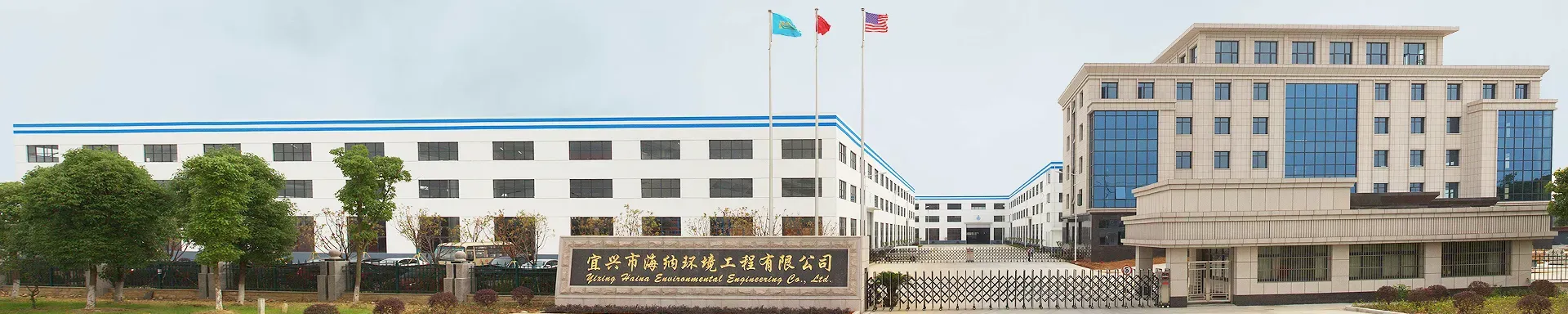
A cyclonic dust separator uses centrifugal force to spin dust-laden air. Heavier particles hit the wall and fall into a hopper, while clean air exits the top. No moving parts, no filter media in the primary stage. The key is optimizing the cyclone’s geometry: inlet velocity, cone angle, and vortex finder diameter. At Yixing Haina Environmental Engineering Co., Ltd, we use CFD modeling to tailor each unit to the specific particle size distribution and airflow. For the furniture factory, we installed a high-efficiency cyclone before the existing baghouse. Result: pressure drop stabilized at 3 inches, fan energy dropped by 22%, and bag life extended from 3 weeks to 9 months. Annual savings: $67,000.
For combustible dust, we integrate explosion venting and rotary airlocks. The cyclone acts as a pre-separator, reducing the dust load to the secondary filter by 95%, which minimizes the risk of a deflagration propagating back into the workspace. In the Stuttgart shop, after installing a Yixing Haina cyclone with a 10:1 turndown ratio, they passed their ATEX audit with zero findings and cut filter replacement costs by 80%.
For contamination-sensitive applications, we use sanitary designs with polished stainless steel and continuous purge systems. The Cork pharmaceutical plant now captures 99.9% of particles above 5 microns in the cyclone, and their final HEPA filter lasts 18 months instead of 3. Batch rejection dropped to 0.3%, saving €7,600 per week.
Comparison: Cyclonic Separator vs. Traditional Baghouse
| Parameter | Cyclonic Separator | Traditional Baghouse |
|---|---|---|
| Pressure Drop | 2–4 in. w.c. | 6–12 in. w.c. |
| Filter Replacement | None (primary stage) | Every 3–6 months |
| Energy Use | Lower (smaller fan) | Higher (overcome resistance) |
| Explosion Risk | Low (no filter media) | High (dust accumulation) |
| Maintenance | Minimal (inspect cone) | Frequent (bag change) |
| Fine Particle Capture | Down to 5–10 µm | Down to 1 µm (with bags) |
Customer Success Stories
Case 1: Woodworking in Växjö, Sweden
Lars Johansson, plant manager at Nordic Timber AB, struggled with a baghouse that clogged every 10 days. After installing a Yixing Haina cyclone (model HN-1200), pressure drop fell from 9 to 3.5 in. w.c. Fan power dropped by 18 kW, saving €14,000 annually. Bag life extended to 14 months. Lars says: “We haven’t touched a filter bag in over a year. The cyclone just works.”
Case 2: Metal Grinding in Nagoya, Japan
Tanaka Precision Grinding faced a combustible dust citation. They installed a cyclone with explosion venting and a rotary valve. Dust concentration in the duct dropped from 45 g/m³ to 2 g/m³. The local fire marshal approved the system without additional filters. Production downtime for cleaning fell from 8 hours/month to 1 hour/month. Manager Kenji Tanaka: “The ROI was under 9 months. Safety and savings together.”
Case 3: Food Processing in Rotterdam, Netherlands
Dutch Starch Products had a sticky starch dust that blinded filters weekly. A Yixing Haina cyclone with a heated cone and air purge eliminated the issue. Filter changes went from weekly to quarterly. Energy consumption dropped 25%. Plant engineer Annelies de Vries: “We tried three other suppliers. Yixing Haina understood our product’s stickiness and designed for it.”
Case 4: Pharmaceutical in Cork, Ireland
As mentioned, this plant saved €7,600/week. The validation team praised the cyclone’s surface finish (Ra < 0.8 µm) and lack of crevices. Quality manager Siobhán O’Connor: “Our cross-contamination risk is now negligible. The cyclone is a critical control point.”
Case 5: Foundry in Monterrey, Mexico
Fundidora del Norte had a sand-handling system that emitted 200 mg/m³ of dust. After a Yixing Haina cyclone, emissions dropped to 15 mg/m³, meeting Mexican NOM-043. They recovered 2 tons of sand per week for reuse, saving $1,200/week. Maintenance supervisor Carlos Ruiz: “The cyclone paid for itself in 5 months.”
Applications and Partnerships
Cyclonic dust separators from Yixing Haina Environmental Engineering Co., Ltd are used in woodworking, metalworking, food processing, pharmaceuticals, foundries, and recycling. We partner with OEMs like Nederman, Donaldson, and Camfil to integrate cyclones as pre-separators, and with EPC firms like Bilfinger and Wood plc for turnkey installations. Our units are specified by Fortune 500 companies such as 3M and Nestlé for their dust control upgrades. When you buy from Yixing Haina, you get CFD-optimized designs, ATEX-compliant options, and a 5-year warranty on the cyclone body.
FAQ
Q1: What is the pressure drop across a cyclonic dust separator?
A: Typically 2–4 inches of water column for our standard models, depending on airflow and loading. This is 50–70% lower than a baghouse, reducing fan energy.
Q2: Can a cyclone handle sticky or fibrous dust?
A: Yes, with modifications. We use heated cones, air purges, and steep cone angles (e.g., 60°–70°) to prevent bridging. For fibrous materials, we add a secondary vortex breaker.
Q3: How do I size a cyclone for my airflow?
A: We need your CFM, particle size distribution, temperature, and moisture. Our engineers run CFD to select the inlet area and cone geometry. A rule of thumb: inlet velocity 15–20 m/s for optimal efficiency.
Q4: Is a cyclone ATEX compliant for combustible dust?
A: Yes, when equipped with explosion venting, rotary airlocks, and grounding. We provide ATEX Zone 20/21/22 certifications and risk assessments.
Q5: What maintenance does a cyclone require?
A: Minimal. Inspect the cone and hopper monthly for wear. Check the rotary valve quarterly. No filter media to replace. Annual internal inspection recommended.
Conclusion: Take Control of Your Dust and Your Budget
A cyclonic dust separator isn’t just a piece of equipment—it’s a financial decision. By cutting energy, eliminating filter waste, and reducing compliance risk, you can achieve payback in under a year. Yixing Haina Environmental Engineering Co., Ltd has helped over 400 facilities across 30 countries. To get a customized ROI analysis or a technical whitepaper on cyclone design for your industry, contact our sales engineers. Stop paying the hidden dust tax. Let’s design a cyclone that pays you back.