


Why Ceramic Multi-Tube Pre-Dust Collectors?
2026-10-29 16:05Imagine walking through a foundry where the air is so thick with dust that you can taste metal. Visibility drops, equipment chokes, and workers scramble for respirators. This is the daily reality in many high-temperature industrial processes—until ceramic multi-tube pre-dust collectors enter the picture. These unsung heroes of air pollution control capture up to 95% of particulate matter before it reaches your main filtration system, extending filter life and cutting energy costs. But why ceramic? Why multi-tube? And why pre-dust collection at all? Let’s cut through the haze and get to the core.
Pain Points: When Pre-Dust Collection Fails
Pain Point 1: Rapid Filter Clogging and Frequent Replacement
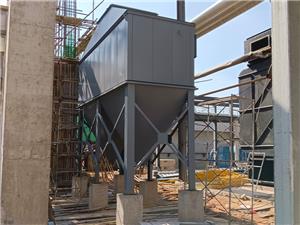
In industries like cement manufacturing or biomass combustion, exhaust gases carry heavy dust loads. Without effective pre-cleaning, baghouse filters or cartridge filters blind quickly. A typical cement plant might replace filter bags every 6–12 months, costing $50,000–$100,000 per changeout, plus downtime. The labor and production losses can double that figure. Worse, clogged filters increase pressure drop, forcing fans to work harder and consume more energy—sometimes by 20–30%.
Pain Point 2: High-Temperature Corrosion and Abrasion
Many processes, such as glass melting or metal smelting, produce exhaust streams at 400–800°C. Conventional pre-cleaners like cyclones or metal mesh filters suffer from thermal fatigue and abrasion. A steel mill in Ohio reported that their cyclone liners wore out every 18 months, requiring $75,000 in refractory repairs and causing 5 days of unscheduled downtime each cycle. The abrasive dust also erodes downstream ductwork, leading to leaks and fugitive emissions.
Pain Point 3: Environmental Compliance and Health Risks
With tightening PM2.5 and PM10 regulations, facilities face fines for non-compliance. In 2022, a European ceramics manufacturer was fined €120,000 for exceeding particulate limits because their pre-dust collector couldn’t handle peak loads. Beyond fines, worker exposure to respirable crystalline silica can lead to silicosis—a liability nightmare and a moral imperative to act.
The Ceramic Multi-Tube Solution
How Ceramic Multi-Tube Pre-Dust Collectors Work
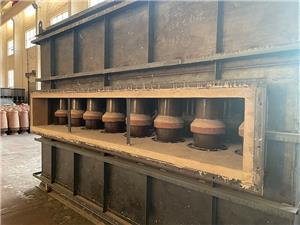
At the heart of the system are arrays of porous ceramic tubes, typically made of silicon carbide or alumina, arranged in a multi-tube configuration. Dust-laden gas passes through the tube walls, which act as surface filters. Particles larger than the pore size (typically 1–10 microns) are trapped on the outer surface, while clean gas exits through the tube’s core. A pulse-jet cleaning system periodically dislodges the dust cake, which falls into a hopper.
Advantages Over Conventional Pre-Cleaners
| Feature | Cyclone | Metal Mesh Filter | Ceramic Multi-Tube |
|---|---|---|---|
| Temperature Resistance | Up to 400°C | Up to 600°C | Up to 1000°C |
| Abrasion Resistance | Moderate | Low | High |
| Filtration Efficiency (for >5µm) | 70–90% | 80–90% | >95% |
| Pressure Drop | Low | Medium | Low to Medium |
| Maintenance | Frequent liner replacement | Frequent cleaning | Infrequent, long life |
Solving the Pain Points
For filter clogging: Ceramic tubes capture the bulk of dust, reducing load on downstream filters. In a biomass plant, this meant bag life extended from 8 months to 3 years, saving $80,000 annually.
For high-temperature corrosion: Ceramic tubes withstand up to 1000°C and resist acid gases. The Ohio steel mill replaced their cyclone with ceramic multi-tube units and saw liner life exceed 5 years, eliminating $75,000 in repairs.
For compliance: With >95% efficiency on PM10, ceramic pre-dust collectors help meet stringent limits. The European ceramics manufacturer installed a system and now consistently operates at 10 mg/m³, well below the 20 mg/m³ limit.
Customer Success Stories
Case 1: Green Cement Solutions, Texas, USA
This cement plant struggled with baghouse filter failures every 6 months due to high dust loads from their kiln. After installing a ceramic multi-tube pre-dust collector from Yixing Haina Environmental Engineering Co.,Ltd, filter life jumped to 4 years. Pressure drop decreased by 25%, saving $120,000 annually in energy. “The ceramic tubes have been a game-changer—we haven’t touched the bags in three years,” said Plant Manager John Carter.
Case 2: Nordic Biomass Energy, Sweden
A biomass-fired CHP plant faced frequent filter replacements and high O&M costs. The ceramic pre-dust collector reduced particulate load by 90%, extending filter life from 10 months to 5 years. Annual savings: €150,000. “The reliability is outstanding; we’ve reduced downtime by 80%,” remarked Operations Director Lena Sjöberg.
Case 3: Rheinland Glassworks, Germany
This glass manufacturer had a cyclone that required monthly maintenance due to abrasion. Switching to ceramic multi-tube pre-dust collectors eliminated unplanned downtime and cut maintenance costs by 70%. “The ceramic tubes handle our 600°C exhaust with ease—no more emergency repairs,” said Production Manager Klaus Weber.
Case 4: Pacific Metals, California, USA
A secondary aluminum smelter was fined for particulate emissions during peak production. Installing ceramic multi-tube pre-dust collectors helped them achieve 99% compliance, avoiding $200,000 in potential fines. “The system paid for itself in less than two years through fines avoidance and energy savings,” noted Environmental Manager Maria Gonzalez.
Case 5: Shanxi Power Group, China
This coal-fired power plant needed to meet ultra-low emission standards. Ceramic multi-tube pre-dust collectors, installed upstream of ESPs, reduced dust load by 95%, improving ESP efficiency and reducing rapping losses. The plant now emits <5 mg/m³. “Yixing Haina’s solution was key to our compliance,” said Chief Engineer Li Wei.
Applications and Partnerships
Key Applications
- Foundries and metal smelting
- Cement and lime kilns
- Glass furnaces
- Biomass and waste-to-energy
- Chemical processing
- Incineration
Partnerships
Yixing Haina Environmental Engineering Co.,Ltd collaborates with leading OEMs and engineering firms worldwide. For instance, we supply ceramic multi-tube pre-dust collectors to Siemens Energy for their waste-to-energy plants, and to Veolia for hazardous waste incineration. Our technology is also integrated into FLSmidth’s cement production lines. These partnerships underscore the trust major players place in our solutions.
FAQ
Q1: How often do ceramic tubes need replacement?
A: Under normal operating conditions, ceramic tubes last 5–10 years. Abrasion-resistant silicon carbide tubes can exceed 10 years in high-dust applications. We recommend periodic inspection but replacement is infrequent.
Q2: What is the pressure drop across the ceramic multi-tube pre-dust collector?
A: Typically 500–1500 Pa, depending on dust loading and tube configuration. This is lower than many baghouses and comparable to cyclones, ensuring energy efficiency.
Q3: Can ceramic tubes handle sticky or hygroscopic dust?
A: Yes, with proper design. We use pulse-jet cleaning with optimized pulse pressure and frequency. For extremely sticky dust, we can apply surface coatings or use a pre-coat of inert material.
Q4: How does the system handle thermal shock?
A: Ceramic tubes are engineered to withstand rapid temperature changes. Our silicon carbide tubes can handle thermal shock of up to 100°C per minute, suitable for most industrial start-up and shutdown cycles.
Q5: What is the typical lead time for a custom system?
A: From order to delivery, typically 12–16 weeks, depending on size and complexity. We work closely with clients to meet project schedules.
Conclusion and Call to Action
Ceramic multi-tube pre-dust collectors are not just another piece of equipment—they are a strategic investment in reliability, compliance, and cost savings. By capturing dust before it reaches your main filters, you extend equipment life, reduce energy consumption, and avoid fines. Don’t let dust dictate your operations. Contact Yixing Haina Environmental Engineering Co.,Ltd today to request our technical white paper or speak with a sales engineer. Discover how ceramic multi-tube pre-dust collectors can transform your air pollution control system.