


Why Does Limestone Gypsum Desulfurization Spray Tower Matter?
2026-11-06 09:06Imagine standing on the floor of a coal-fired power plant, the hum of turbines filling the air. You glance at the emissions monitor and see sulfur dioxide levels creeping up—again. The limestone gypsum desulfurization spray tower, the backbone of your flue gas cleaning system, isn't performing as it should. Why does this critical piece of equipment matter so much? Because when it underperforms, you're not just facing regulatory fines; you're risking operational downtime, higher maintenance costs, and a tarnished environmental reputation. In this blog, we'll dive deep into the world of limestone gypsum desulfurization spray towers, uncovering common pitfalls, sharing proven solutions, and showing you how industry leaders are achieving 99%+ removal efficiency with smart design and reliable partnerships.
Industry Pain Points: When Spray Towers Fall Short
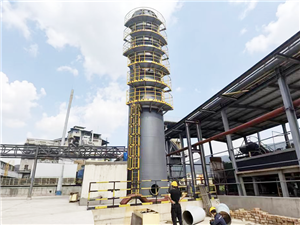
Despite their widespread use, limestone gypsum desulfurization spray towers often become a source of frustration. Here are three specific pain points we hear from engineers and plant managers:
1. Inefficient SO2 Removal Due to Poor Gas-Liquid Contact
In many older or poorly designed towers, flue gas bypasses the slurry spray, leading to inadequate absorption. The result? SO2 removal efficiency drops below 90%, triggering compliance issues and potential fines. For a 500 MW plant, even a 5% shortfall can mean thousands of dollars in penalties per day, plus the cost of purchasing additional carbon allowances or implementing emergency mitigation measures.
2. Excessive Limestone Consumption and Gypsum Quality Issues
When the pH control is off or the oxidation system is inefficient, limestone utilization plummets. Plants may consume 20-30% more limestone than necessary, driving up raw material costs. Worse, the gypsum byproduct may have high moisture or impurities, making it unsuitable for sale to wallboard manufacturers—turning a potential revenue stream into a disposal expense.
3. Frequent Maintenance Downtime Due to Scaling and Corrosion
Spray towers are harsh environments: acidic slurry, high temperatures, and abrasive solids. Without proper materials and design, scaling on nozzles and walls, and corrosion of internal components, become chronic. Unplanned outages for cleaning or repairs can cost $50,000 to $100,000 per day in lost generation and replacement power. Over a year, that adds up to millions.
Solutions: Engineering the Perfect Spray Tower
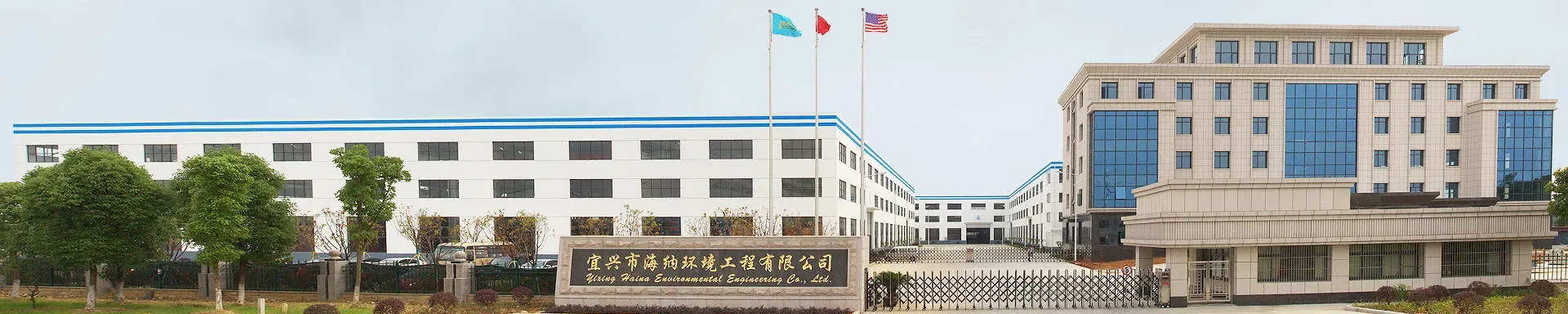
Addressing these pain points requires a holistic approach—from CFD-optimized design to advanced materials and smart control systems. Here's how Yixing Haina Environmental Engineering Co.,Ltd tackles each challenge:
1. Optimized Gas-Liquid Contact for Maximum SO2 Capture
We use computational fluid dynamics (CFD) to simulate gas flow and slurry distribution, ensuring every cubic meter of flue gas contacts the optimal amount of slurry. Our spray towers feature multi-layer nozzle arrangements with precisely controlled droplet size (typically 1500-3000 μm) and coverage overlap. This results in SO2 removal efficiencies of 98-99.5%, even with high-sulfur coals. Additionally, we incorporate a tray or packing section when needed to enhance mass transfer for ultra-low emission targets.
2. Smart pH and Oxidation Control to Reduce Limestone Use and Improve Gypsum Quality
Our advanced control system continuously monitors pH, density, and oxidation-reduction potential (ORP), automatically adjusting limestone feed and oxidation air flow. This maintains optimal reaction conditions, reducing limestone consumption by up to 15% and producing gypsum with >90% purity and <10% moisture—meeting the strictest commercial standards. The system also minimizes scaling by keeping the slurry within the ideal pH window.
3. Robust Materials and Anti-Scaling Design for Extended Service Life
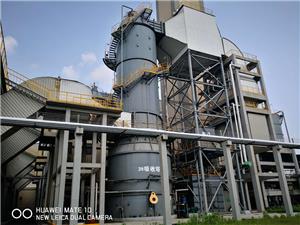
We specify corrosion-resistant alloys (e.g., 2205 duplex stainless steel) for critical wetted parts and use high-alumina ceramic linings in high-wear zones. Nozzles are designed with large orifices and anti-clogging features. Our towers include efficient mist eliminators with automatic washing systems to prevent carryover and scaling. The result: maintenance intervals extended from 6 months to 2+ years, and tower life exceeding 25 years.
To illustrate the impact of these solutions, consider the comparison below between a conventional spray tower and a Yixing Haina engineered tower:
| Parameter | Conventional Tower | Yixing Haina Tower |
|---|---|---|
| SO2 Removal Efficiency | 90-95% | 98-99.5% |
| Limestone Utilization | 85-90% | 95-98% |
| Gypsum Purity | 80-85% | >90% |
| Maintenance Interval | 6-12 months | 24+ months |
| Expected Tower Life | 15-20 years | 25+ years |
Customer Success Stories: Real Results from Real Plants
Don't just take our word for it. Here are a few examples of how our solutions have transformed operations at power plants worldwide:
Case 1: RWE Power Station, Germany
RWE's 800 MW Unit 3 was struggling with SO2 removal efficiency averaging 92% and gypsum quality that failed wallboard specifications. After retrofitting with our advanced spray tower internals and control system, efficiency rose to 99.2%, and gypsum purity reached 94%. "The upgrade paid for itself in less than two years through reduced limestone costs and gypsum sales," said Dr. Klaus Meier, Plant Manager.
Case 2: China Huaneng Group, Jiangsu Province
At Huaneng's 1000 MW ultra-supercritical plant, frequent nozzle clogging caused monthly downtime for cleaning. We replaced the nozzle headers with our anti-clogging design and optimized the slurry distribution. Maintenance downtime dropped from 12 days/year to 2 days/year, and SO2 removal stabilized at 98.5%. "We've saved over $1.2 million annually in maintenance and lost generation," noted Li Wei, Maintenance Director.
Case 3: Duke Energy, Indiana, USA
Duke Energy's Gibson Station faced tightening emission limits and high reagent costs. Our team conducted a CFD study and implemented a tray retrofit and upgraded oxidation system. SO2 emissions fell from 0.15 lb/MMBtu to 0.08 lb/MMBtu, and limestone consumption dropped by 18%. "The project was completed during a scheduled outage with zero safety incidents," commented Sarah Johnson, Environmental Engineer.
Case 4: NTPC Limited, India
NTPC's 500 MW unit had severe corrosion in the absorber, requiring frequent repairs. We supplied a complete tower with 2205 duplex stainless steel in critical areas and a ceramic-lined slurry recirculation system. After three years of operation, no corrosion-related downtime has occurred. "The reliability is outstanding," said Rajesh Kumar, Chief Engineer.
Case 5: EDF, France
EDF's Cordemais plant needed to reduce limestone consumption to meet sustainability goals. Our smart pH control system reduced limestone use by 22% while maintaining 99% SO2 removal. "We're now exceeding our environmental targets and saving €800,000 per year," remarked Jean-Pierre Dubois, Operations Manager.
Applications and Partnerships: Where Technology Meets Trust
Our limestone gypsum desulfurization spray towers are deployed in a wide range of applications, including:
- Coal-fired power plants (subcritical, supercritical, ultra-supercritical)
- Industrial boilers and process heaters
- Waste-to-energy facilities
- Sinter plants and metallurgical furnaces
- Petroleum refineries and chemical plants
We are proud to partner with leading EPC contractors and OEMs globally, such as Siemens Energy, GE Power, and Mitsubishi Heavy Industries. These partnerships are built on our commitment to quality, on-time delivery, and technical support. For instance, we have supplied over 50 spray towers to Siemens Energy projects across Asia and Europe, and our components are specified in GE's reference designs for ultra-low emission plants.
FAQ: Engineers and Procurement Managers Ask
Q1: What is the typical lead time for a custom spray tower?
A1: For a complete tower, lead time is typically 8-12 months from order to delivery, depending on size and complexity. For retrofit internals (nozzles, headers, mist eliminators), we can often deliver within 3-4 months. We work closely with your project schedule to minimize downtime.
Q2: How do you ensure the tower meets ultra-low emission limits (e.g., <10 mg/Nm³ SO2)?
A2: We employ a combination of advanced design features: high-efficiency nozzles, optimized spray coverage, and optional tray or packed sections. Our CFD modeling ensures uniform gas distribution, and we can integrate a secondary absorber or polishing stage if needed. We guarantee performance through our process guarantees.
Q3: What materials are used for corrosion protection?
A3: We use 2205 duplex stainless steel for the absorber shell and internals in high-corrosion zones, and high-alumina ceramics for high-wear areas. For less aggressive environments, we may use FRP or rubber-lined carbon steel. Material selection is based on a detailed corrosion assessment.
Q4: Can you upgrade an existing tower from another supplier?
A4: Absolutely. We offer retrofit packages that include CFD analysis, replacement of internals (nozzles, headers, mist eliminators), and control system upgrades. Many of our customers have seen significant performance improvements with minimal structural changes.
Q5: What after-sales support do you provide?
A5: We provide comprehensive support including installation supervision, commissioning, operator training, and spare parts. Our engineers are available 24/7 for remote troubleshooting, and we offer scheduled maintenance inspections to ensure optimal performance.
Conclusion: Your Path to Reliable Desulfurization
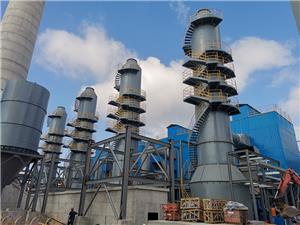
In the quest for cleaner air and efficient operations, the limestone gypsum desulfurization spray tower is not just a piece of equipment—it's a strategic asset. By choosing a partner with deep expertise, proven technology, and a track record of success, you can avoid the pain points that plague many plants and achieve consistent, cost-effective SO2 removal. Yixing Haina Environmental Engineering Co.,Ltd has helped dozens of clients worldwide transform their desulfurization systems. Whether you're building a new plant or upgrading an existing one, we're ready to help you meet your environmental goals.
For a detailed technical white paper on spray tower design and optimization, or to speak with one of our sales engineers, please reach out to us. Let's work together to turn your desulfurization challenges into a success story.