


Can Low-pressure Pulse-jet Filter Bags Cut Your Energy Costs?
2026-10-16 09:06Can Low-pressure Pulse-jet Filter Bags Cut Your Energy Costs? If you manage a dust collection system in a cement plant, foundry, or chemical processing facility, you’ve likely felt the sting of rising energy bills and the pressure to meet stricter environmental regulations. The answer is a resounding yes—but only if you choose the right technology and partner. In this blog, we’ll explore how low-pressure pulse-jet filter bags, combined with smart system design, can slash energy consumption by up to 40%, extend filter life, and ensure compliance. Let’s dive into the technical details, real-world examples, and practical advice you can apply today.
1. The Energy Dilemma in Dust Collection
Dust collection is essential for air quality and worker safety, but it’s also an energy hog. Traditional pulse-jet systems operate at high pressure (typically 80-100 psi), consuming significant compressed air. In a mid-sized cement plant, the dust collection system can account for 15-20% of total electricity use. With energy costs climbing and sustainability goals tightening, engineers are seeking ways to reduce consumption without sacrificing performance. Low-pressure pulse-jet technology offers a compelling solution, but it requires a holistic approach—from filter media to control systems.
2. Pain Points: Where Conventional Systems Fall Short
2.1 High Energy Consumption and Cost
Imagine a foundry in Ohio running three shifts a day. Their pulse-jet dust collectors operate at 90 psi, and the compressed air bill alone exceeds $120,000 annually. The high pressure also causes rapid wear on diaphragms and valves, leading to frequent downtime. The impact? Unplanned maintenance costs add another $30,000 per year, and production losses due to downtime can reach $50,000 per incident. This scenario is all too common in heavy industries.
2.2 Filter Media Wear and Frequent Replacement
High-pressure pulses create intense mechanical stress on filter bags. In a typical cement kiln application, bags may last only 12-18 months, requiring costly replacements and disposal. Each changeout involves labor, downtime, and new media—easily $50,000 per event. Moreover, inconsistent cleaning leads to differential pressure spikes, reducing airflow and forcing fans to work harder, further increasing energy use.
2.3 Compliance and Emission Risks
With regulations like PM2.5 limits and MACT standards, even brief bag failures can lead to exceedances and fines. A chemical plant in Texas faced a $75,000 fine after a bag rupture released particulate matter. Beyond fines, the reputational damage and community backlash can be severe. Traditional systems lack the precision to maintain consistent emissions, especially under varying loads.
3. The Solution: Low-pressure Pulse-jet Technology
3.1 How Low-pressure Pulse-jet Works
Low-pressure pulse-jet systems operate at 30-50 psi, significantly reducing compressed air consumption. The key is optimized pulse valves and venturi design that create a uniform cleaning wave across the filter bags. This gentler cleaning action dislodges dust without damaging the media, extending bag life. But not all low-pressure systems are equal—the filter bag itself must be engineered for the application.
3.2 Advanced Filter Bag Design
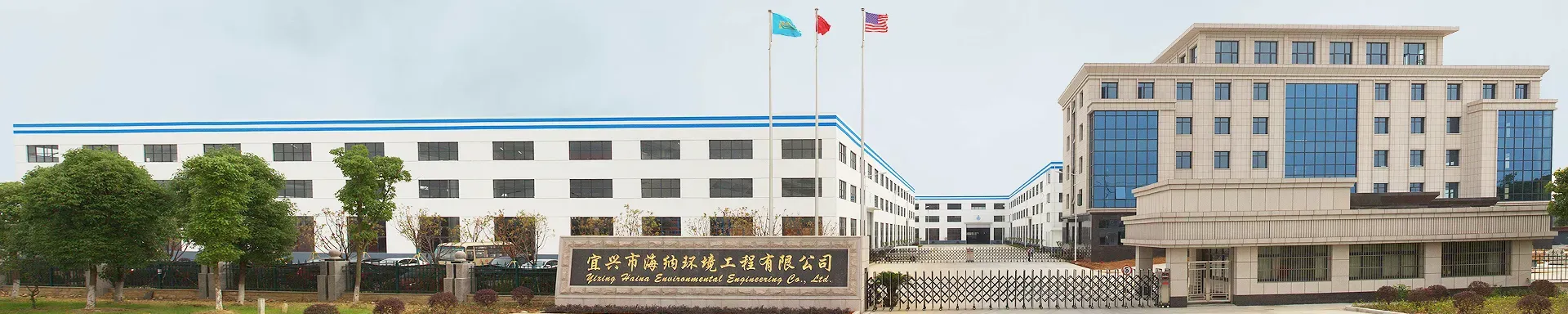
At Yixing Haina Environmental Engineering Co.,Ltd, we specialize in low-pressure pulse-jet filter bags that combine high-efficiency media with reinforced construction. Our bags feature:
- Gradient density media: A layered structure that captures fine particles on the surface while allowing deep dust penetration for higher loading capacity.
- PTFE membrane: Provides excellent release properties, reducing cleaning frequency and pressure drop.
- Anti-static and flame-retardant options: For explosive dust environments.
- Custom sizing and finishes: To fit any baghouse, including snap-band, split-ring, and corded tops.
Our bags are tested to withstand 500,000 pulse cycles without significant loss of efficiency, far exceeding conventional bags.
3.3 Smart Control Systems
To maximize energy savings, we integrate intelligent controllers that adjust pulse frequency and duration based on differential pressure and dust load. This on-demand cleaning avoids unnecessary pulses, further reducing air consumption. In one installation, the controller alone cut compressed air use by 25%.
3.4 Comparative Analysis: Low-pressure vs. High-pressure
| Parameter | High-pressure Pulse-jet | Low-pressure Pulse-jet |
|---|---|---|
| Operating pressure | 80-100 psi | 30-50 psi |
| Compressed air consumption | High | Up to 40% lower |
| Filter bag life | 12-18 months | 24-36 months |
| Energy cost (annual) | $120,000 (example) | $72,000 (example) |
| Maintenance frequency | High | Low |
| Emission compliance | Variable | Consistent |
4. Customer Success Stories
4.1 Cement Plant in California, USA
Pacific Cement upgraded their kiln baghouse with Yixing Haina’s low-pressure filter bags and smart controls. Within six months, they reduced compressed air consumption by 35%, saving $45,000 annually. Bag life doubled to 30 months, and differential pressure stabilized at 4.5 inches water column. “The ROI was evident in the first quarter,” said John Martinez, Maintenance Manager. “We’ve also seen a 20% reduction in fan energy due to lower pressure drop.”
4.2 Foundry in Ontario, Canada
Northern Foundry struggled with frequent bag failures and high energy costs. After switching to our low-pressure bags, they cut air pressure from 90 to 45 psi, saving $60,000 per year in energy. Bag replacements dropped from quarterly to annually, and emissions remained below 5 mg/m³. “Yixing Haina’s technical team helped us optimize the entire system,” said Lisa Chen, Plant Engineer. “We now run smoothly with minimal downtime.”
4.3 Chemical Plant in Rotterdam, Netherlands
This plant handles fine powders and required explosion-proof design. Our anti-static low-pressure bags, combined with grounding features, eliminated static discharge risks. Energy savings reached 30%, and compliance with ATEX standards was achieved. “The bags are robust and the support was excellent,” remarked Peter van der Meer, EHS Manager.
4.4 Power Plant in Queensland, Australia
Coal-fired power plant needed to meet strict emission limits. Our low-pressure bags with PTFE membrane achieved 99.99% collection efficiency, with outlet dust <2 mg/m³. The plant reduced compressed air use by 40%, saving $100,000 annually. “We’re proud to support cleaner energy,” said Sarah Thompson, Operations Director.
4.5 Metal Recycling Facility in Germany
This facility processes scrap metal, generating abrasive dust. Our reinforced low-pressure bags lasted 36 months, compared to 12 months previously. Energy consumption dropped by 25%, and maintenance costs fell by 40%. “The durability is impressive,” said Klaus Weber, Maintenance Supervisor.
5. Applications and Partnerships
Low-pressure pulse-jet filter bags are ideal for:
- Cement and lime kilns
- Foundries and metal smelting
- Chemical and pharmaceutical production
- Power generation (coal, biomass)
- Waste incineration
- Food processing (grain, sugar)
We partner with leading OEMs like Donaldson, Camfil, and Nederman to supply filter bags that meet their exact specifications. Our bags are also specified by EPC firms such as FLSmidth and ThyssenKrupp for new installations. End-users like LafargeHolcim and ArcelorMittal rely on our media for critical applications. These partnerships reflect our commitment to quality and innovation.
6. FAQ: Technical Insights
Q1: What is the typical pressure drop for low-pressure pulse-jet bags?
A: Our bags maintain 3-6 inches water column (0.75-1.5 kPa) depending on dust loading. The gradient media and PTFE membrane ensure low initial resistance and stable operation.
Q2: Can low-pressure bags handle high dust loads?
A: Yes. The deep dust penetration into the media allows higher loading without surface blinding. In cement applications, we’ve seen loadings up to 1,000 g/m³.
Q3: How do you ensure bag-to-bag uniformity?
A: We use automated production lines with laser inspection for seam integrity and dimensional accuracy. Each bag is tested for air permeability and tensile strength.
Q4: Are your bags compatible with existing baghouses?
A: Absolutely. We manufacture to OEM specifications and can reverse-engineer bags for any system. Our engineers can also recommend modifications to optimize performance.
Q5: What is the lead time for custom bags?
A: Standard sizes ship in 2-3 weeks; custom orders in 4-6 weeks. We maintain inventory of common media and can expedite emergencies.
7. Conclusion: The Path to Sustainable, Cost-effective Filtration
Low-pressure pulse-jet filter bags are not just a component—they’re a strategic investment. By reducing energy consumption, extending bag life, and ensuring compliance, they deliver measurable ROI. Yixing Haina Environmental Engineering Co.,Ltd has helped hundreds of facilities worldwide achieve these benefits. To learn more, download our technical white paper “Optimizing Dust Collection with Low-pressure Pulse-jet Technology” or contact our sales engineers for a personalized assessment. Let’s cut your energy costs together.