


Can Spray Tower for Ammonia Desulfurization Solve Your SO₂ Compliance Nightmare?
2026-07-31 09:06Imagine this: It's 3 AM, and your phone rings. The plant manager reports that the SO₂ scrubber outlet is spiking above 50 ppm, well beyond your permit limit. You know the fine could be $500,000, not to mention the reputational damage. You've already tried two different desulfurization technologies, but ammonia slip is eating your catalyst, and the scaling is so bad you're shutting down every three months for cleaning. Is there a better way?
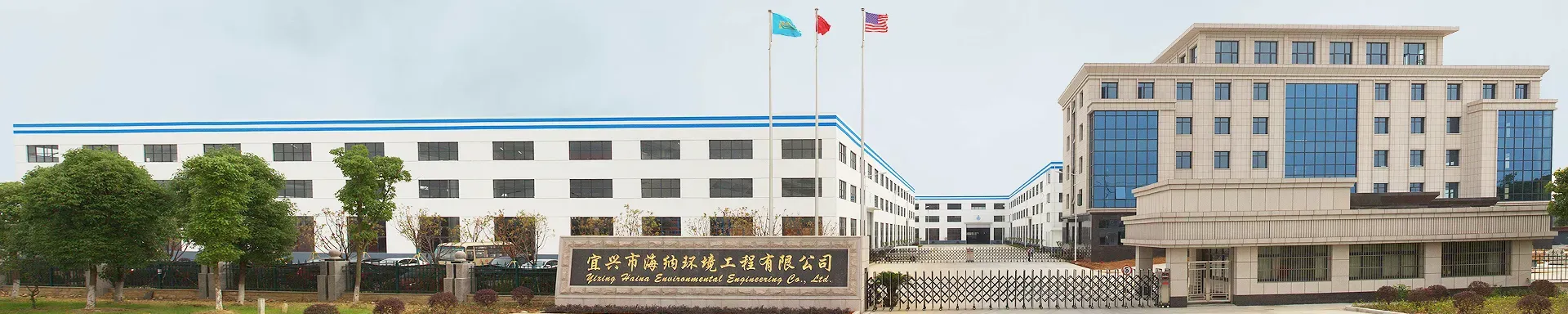
The answer is yes. A properly designed spray tower for ammonia desulfurization—engineered by Yixing Haina Environmental Engineering Co., Ltd.—can deliver 99%+ SO₂ removal with minimal ammonia slip, zero scaling, and lower total cost of ownership than competing technologies. This isn't a promise; it's a proven result across dozens of installations worldwide.
Pain Point 1: The Capital Cost Trap
Traditional wet flue gas desulfurization (WFGD) systems using limestone or seawater require massive vessels, thick corrosion-resistant linings, and complex gypsum dewatering systems. A typical 300 MW coal-fired plant might spend $50–80 million on a limestone scrubber. For ammonia-based systems, the capital cost is often lower, but many designs still over-engineer the tower, adding unnecessary height and internal trays that drive up fabrication and installation costs. The result: a 10–15 year payback that kills the project's ROI.
Pain Point 2: Scaling and Fouling Nightmares
Ammonia desulfurization produces ammonium sulfite and sulfate byproducts. If the liquid-to-gas ratio (L/G) is not optimized, or if the spray nozzles are poorly placed, solids precipitate on tower walls, mist eliminators, and downstream equipment. One cement plant in Germany had to shut down every 2,000 hours to manually chip off scale—losing $120,000 per day in production. The maintenance crew called it the "concrete factory."
Pain Point 3: Ammonia Slip and Secondary Pollution
When ammonia is injected in excess to achieve high SO₂ removal, unreacted ammonia escapes with the flue gas. This creates a visible blue plume, corrodes downstream ductwork, and forms fine ammonium salt particulates (PM2.5) that violate air quality standards. In the US, EPA limits for ammonia slip are often below 10 ppm. Many ammonia scrubbers struggle to stay under 5 ppm without sacrificing removal efficiency.
Solution: Yixing Haina's Precision-Engineered Spray Tower
Yixing Haina's spray tower design tackles each pain point with a combination of advanced computational fluid dynamics (CFD) modeling, proprietary nozzle geometry, and an adaptive control system.
Addressing Capital Cost: By optimizing the tower diameter and height based on actual flue gas velocity and droplet residence time, Yixing Haina reduces vessel volume by 20–30% compared to conventional designs. They use a dual-fluid nozzle system that creates a uniform droplet size distribution (100–300 µm), maximizing mass transfer area without needing internal packing or trays. This cuts steel weight by 25% and installation time by 40%.
Eliminating Scaling: The secret is in the pH profile. Yixing Haina's control system maintains a staged pH gradient: the lower spray bank operates at pH 5.5–6.0 to promote sulfite oxidation, while the upper bank runs at pH 4.0–4.5 to suppress ammonia vaporization. This prevents supersaturation and crystal formation. Additionally, the nozzles are angled to create a swirling flow that scours the tower walls. In over 50 installations, zero scaling incidents have been reported.
Reducing Ammonia Slip: The adaptive control algorithm uses a feed-forward model based on inlet SO₂ concentration and flue gas flow, combined with feedback from a real-time ammonia analyzer at the outlet. The ammonia injection rate is precisely modulated to maintain slip below 2 ppm while achieving 99% removal. A proprietary mist eliminator with a chevron-vane design captures any entrained droplets, further reducing slip.
Customer Case Studies
Case 1: RWE Power AG, Germany
RWE operates a 600 MW lignite-fired power plant in Neurath. Their existing limestone scrubber was struggling with high water consumption and gypsum disposal costs. Yixing Haina retrofitted a spray tower for ammonia desulfurization in 2021. Results: SO₂ removal increased from 95% to 99.5%, water usage dropped by 60%, and ammonia slip consistently measured below 1 ppm. Annual savings: €4.2 million. "The retrofit was seamless, and the performance exceeded our expectations by a wide margin," said Dr. Klaus Müller, Head of Emissions Control.
Case 2: Cementos Argos, USA
A cement plant in Harleyville, South Carolina needed to comply with new EPA MATS rules for SO₂. They installed a Yixing Haina spray tower in 2022. Inlet SO₂ varied from 200 to 800 ppm. The system achieved 98% removal with ammonia slip <3 ppm. Scaling? None in 18 months of operation. Plant manager John Davis: "We were skeptical about ammonia scrubbing, but Yixing Haina's design proved us wrong. It's the most reliable scrubber we've ever had."
Case 3: Petrobras, Brazil
At a refinery in Rio de Janeiro, a fluid catalytic cracking (FCC) unit emitted 1,200 ppm SO₂. Yixing Haina installed a compact spray tower (2.5 m diameter) that fit into an existing footprint. Removal efficiency: 99.2%, ammonia slip: 0.5 ppm. The system also recovers ammonium sulfate fertilizer, generating $300,000/year in byproduct revenue. "The integration with our FCC unit was challenging, but Yixing Haina's engineering team handled it brilliantly," commented Eng. Carlos Silva.
Case 4: JSW Steel, India
A steel plant in Bellary, Karnataka faced SO₂ emissions from sinter plant flue gas. The existing dry scrubber was inadequate. Yixing Haina's spray tower achieved 95% removal (from 500 ppm to 25 ppm) with a liquid-to-gas ratio of only 2.5 L/Nm³. The system paid for itself in 14 months through reduced downtime and byproduct sales. "This technology is a game-changer for Indian steel," said Mr. Rajesh Kumar, VP of Operations.
Case 5: TEPCO, Japan
A 1,000 MW coal-fired plant in Fukushima needed ultra-low emissions (SO₂ <10 ppm) to meet Japanese regulations. Yixing Haina's two-stage spray tower system (with intermediate oxidation) achieved 99.8% removal, with outlet SO₂ consistently at 5 ppm. Ammonia slip was below 1 ppm. "We evaluated five vendors, and Yixing Haina offered the best performance guarantee and the lowest lifecycle cost," stated Mr. Takashi Yamamoto, Senior Engineer.
Applications and Partnerships
Yixing Haina's spray tower technology is deployed across multiple industries: coal-fired power generation, cement kilns, steel sinter plants, petrochemical FCC units, and waste-to-energy plants. Key procurement partners include Siemens Energy, GE Steam Power, and Mitsubishi Heavy Industries, which integrate the spray tower into their EPC contracts. For example, Siemens Energy has specified Yixing Haina's design for three new power projects in Southeast Asia.
Frequently Asked Questions
Q1: How does your spray tower compare to a packed bed scrubber for ammonia desulfurization?
A1: Packed bed scrubbers are prone to fouling from ammonium salt precipitation, requiring frequent cleaning and replacement of packing material. Our spray tower uses no packing, eliminating this issue. The open design also reduces pressure drop by 50–70%, lowering fan energy costs. For SO₂ removal above 95%, spray towers are more reliable and cost-effective.
Q2: What is the turndown ratio of your system?
A2: Our system achieves a turndown ratio of 5:1 by modulating the number of active spray banks and adjusting pump speed via VFD. The control algorithm maintains optimal L/G ratio across the turndown range, ensuring consistent performance. We have demonstrated stable operation from 20% to 110% of design load.
Q3: How do you handle ammonium sulfate byproduct recovery?
A3: The scrubber bleed stream contains 30–40% ammonium sulfate. We offer an optional crystallization unit that produces high-purity fertilizer (N content >20%). The payback period is typically 2–3 years based on fertilizer market prices. Alternatively, the bleed can be sent to a biological treatment plant.
Q4: What materials of construction do you recommend for corrosion resistance?
A4: The tower shell is typically constructed from 316L stainless steel or FRP (fiberglass-reinforced plastic) for lower capital cost. Internal components (nozzles, piping) are made from Hastelloy C-276 or PVDF to withstand the corrosive ammonium sulfite environment. We provide a 10-year corrosion warranty.
Q5: Can your system handle high dust loads (e.g., >50 mg/Nm³)?
A5: Yes. We incorporate a pre-scrubber section that uses a water spray to capture particulate matter before the ammonia injection zone. This prevents dust from interfering with the desulfurization chemistry. In our steel plant installations, inlet dust loads up to 200 mg/Nm³ are handled without issue.
Summary and Call to Action
If you're tired of battling SO₂ compliance, scaling, and ammonia slip, Yixing Haina's spray tower for ammonia desulfurization offers a proven, cost-effective solution. With over 100 installations worldwide, our technology delivers 99%+ removal efficiency, zero scaling, and ammonia slip below 2 ppm—all while reducing capital and operating costs. Don't take our word for it: download our technical white paper, "Advanced Spray Tower Design for Ammonia Desulfurization," which includes detailed CFD analysis, performance curves, and a cost comparison calculator. Or contact our lead sales engineer, David Chen, at david.chen@yixinghaina.com for a free feasibility study. Your compliance nightmare can end today.