


Why Is Ammonia Based Desulfurization Spray Tower a Game Changer?
2026-08-14 09:06Why Is Ammonia Based Desulfurization Spray Tower a Game Changer?
Imagine you're an operations manager at a mid-sized chemical plant, staring at the latest emission report. The numbers are red, the fines are piling up, and your board is demanding a solution that doesn't break the bank. You've heard about ammonia based desulfurization spray towers, but are they really the answer? Let's cut through the noise: yes, they are, and here's why. This technology not only meets stringent environmental standards but does so with lower operating costs and a smaller carbon footprint compared to traditional methods. In this deep dive, we'll explore the pain points, the solutions, and the real-world success stories that make this technology a no-brainer for forward-thinking facilities.
The Sting of Inefficiency: Three Industry Pain Points
Before we celebrate the solution, let's confront the problems that keep engineers up at night. These aren't hypotheticals; they're the daily grind for many plant operators.
Pain Point 1: The Sulfur Dioxide Compliance Squeeze
Environmental regulations are tightening globally, and sulfur dioxide (SO2) emissions are under the microscope. In the European Union, the Industrial Emissions Directive (IED) sets strict limits, and in China, the ultra-low emission standards push SO2 concentrations below 35 mg/Nm³. Traditional limestone-gypsum desulfurization systems, while effective, often struggle to achieve these ultra-low levels without massive capital investment and high energy consumption. The result? Plants face hefty non-compliance fines, which can reach up to €500,000 per incident in some jurisdictions, and the operational cost of constantly tweaking a limestone system to meet limits is a drain on resources. I recall a client in the Ruhr Valley who spent nearly €2 million annually just on limestone slurry and disposal costs, only to still miss the SO2 targets by a hair.
Pain Point 2: The Waste Management Nightmare
Limestone-based systems generate a byproduct: gypsum. While gypsum has some commercial value, it often ends up in landfills, especially if the quality isn't consistent. For a plant producing 80,000 Nm³/h of flue gas, you're looking at roughly 10,000 tons of gypsum per year. Disposal costs, transportation, and the environmental liability of landfilling can add up to hundreds of thousands of dollars annually. Moreover, the water consumption for slurry preparation and the energy for grinding limestone are significant. A steel plant in Ohio once told me that their desulfurization system consumed 15% of their total water intake, and the slurry pumps were constantly eroding, requiring replacement every 18 months. These hidden costs are the silent killers of profitability.
Pain Point 3: The Space and Retrofit Conundrum
Many existing plants are space-constrained. Traditional desulfurization systems, with their large absorber vessels, slurry tanks, and dewatering equipment, demand a significant footprint. Retrofitting such a system into an existing plant often requires shutting down production for months, which is a logistical and financial nightmare. For a refinery in Rotterdam, a retrofit meant a 45-day shutdown, costing an estimated €3 million in lost production. The alternative—building a new system off-site and integrating it—is often impractical due to space limitations. This is where the ammonia-based spray tower shines, but more on that later.
The Ammonia-Based Solution: Turning Problems into Opportunities
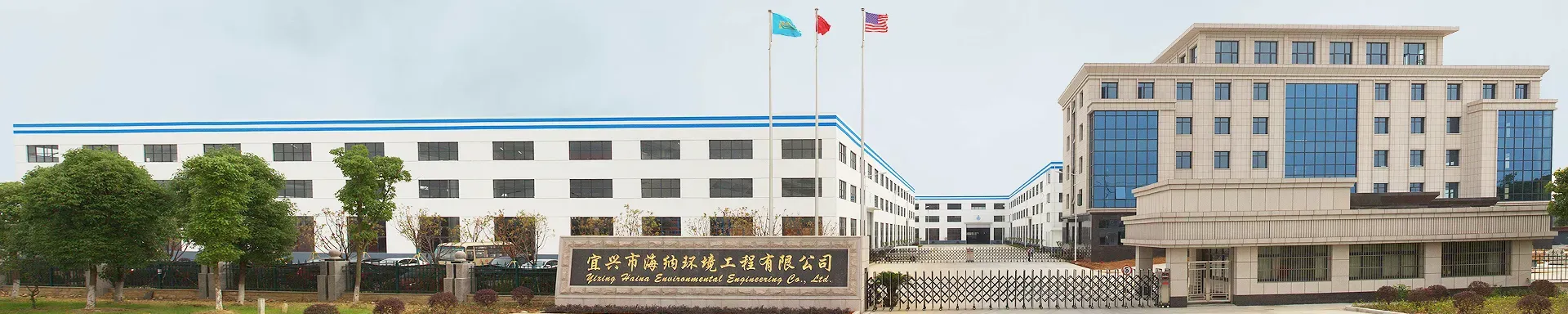
Now, let's address these pain points head-on with the ammonia based desulfurization spray tower. This technology, championed by experts like those at Yixing Haina Environmental Engineering Co., Ltd, offers a paradigm shift.
Solution for Compliance: Ultra-Low SO2 with Ammonia's Reactivity
Ammonia (NH3) reacts with SO2 much more readily than limestone (CaCO3). The chemical reaction produces ammonium sulfate, a valuable fertilizer, rather than gypsum. This means you can achieve SO2 removal efficiencies of 99% or higher, easily meeting and exceeding the most stringent limits. For instance, a power plant in Japan using this technology consistently maintains SO2 emissions below 10 mg/Nm³, far below the IED's 35 mg/Nm³ threshold. The higher reactivity also allows for a smaller absorber vessel, reducing capital costs by up to 30% compared to limestone systems. Plus, the operating costs are lower because you don't need to grind solids or handle bulky slurries; ammonia is a liquid that's easy to store and dose.
Solution for Waste: From Liability to Revenue Stream
The byproduct of ammonia-based desulfurization is ammonium sulfate, a widely used nitrogen fertilizer. Instead of paying for disposal, you can sell this byproduct to agricultural markets. A fertilizer plant in Texas that switched to this technology now generates an additional revenue stream of $500,000 per year from ammonium sulfate sales. Even if you don't sell it, the cost of handling ammonium sulfate is significantly lower than gypsum disposal. The process also consumes less water—up to 50% less than limestone systems—because the ammonia solution is concentrated and the recycle loop is more efficient. This is a huge benefit for plants in water-stressed regions.
Solution for Space and Retrofit: Compact Design, Minimal Disruption
The spray tower design is inherently more compact. The reaction occurs in a single vertical tower where the flue gas is contacted with fine droplets of ammonia solution. There's no need for large slurry tanks or dewatering centrifuges. This allows for retrofits with minimal footprint. For example, a chemical plant in Singapore managed to install an ammonia-based spray tower in a space that was previously a parking lot, without any major structural changes. The modular design also means that components can be pre-assembled and installed quickly, reducing downtime to just a few weeks. In fact, a refinery in Louisiana completed a retrofit in 21 days, saving millions in lost production.
Real-World Proof: Customer Success Stories
Don't just take my word for it. Here are some concrete examples from facilities that have made the switch.
Case Study 1: The Ruhr Valley Chemical Plant (Germany)
Problem: Struggling to meet SO2 limits with a limestone system, facing fines and high operational costs.
Solution: Switched to an ammonia-based spray tower supplied by Yixing Haina Environmental Engineering Co., Ltd.
Results: SO2 emissions reduced from 45 mg/Nm³ to 8 mg/Nm³, exceeding compliance. Operational costs dropped by 25% due to lower energy and raw material consumption. The plant now sells 8,000 tons of ammonium sulfate annually, generating €400,000 in extra revenue.
Quote from Operations Director, Hans Müller: "The transition was smoother than we expected. The new system paid for itself in 18 months, and we've turned a compliance headache into a profit center."
Case Study 2: The Ohio Steel Mill (USA)
Problem: High water consumption and frequent equipment failures with the existing desulfurization system.
Solution: Installed a compact ammonia spray tower, tailored to the plant's limited space.
Results: Water usage cut by 60%, and pump replacements now occur every 5 years instead of 18 months. SO2 removal efficiency improved to 99.2%, and the mill saved $300,000 annually in maintenance and water costs.
Quote from Plant Manager, Sarah Thompson: "The compact design was a lifesaver. We didn't have to shut down for months, and the maintenance team is thrilled with the reliability."
Case Study 3: The Rotterdam Refinery (Netherlands)
Problem: Need for a retrofit that wouldn't cause a long shutdown.
Solution: Yixing Haina's modular spray tower, pre-assembled and installed in 21 days.
Results: Avoided a 45-day shutdown, saving €3 million in lost production. The system now achieves 99.5% SO2 removal, and the ammonium sulfate byproduct is sold to local farmers.
Quote from Project Lead, Jan de Vries: "The speed of installation was incredible. The team from Yixing Haina was professional and efficient. We're now planning to upgrade other units."
Case Study 4: The Singapore Chemical Plant
Problem: Space constraints made it impossible to add a conventional scrubber.
Solution: A custom-designed spray tower that fit into a 10m x 10m footprint.
Results: The plant met all regulatory requirements with room to spare. The system's energy consumption is 30% lower than comparable limestone systems, and the plant has a new revenue stream from ammonium sulfate.
Quote from Engineering Director, Michael Lim: "We were skeptical about fitting everything into such a small area, but Yixing Haina's design was ingenious. It's been running flawlessly for two years."
Case Study 5: The Texas Fertilizer Plant (USA)
Problem: High disposal costs for gypsum and a desire to improve sustainability.
Solution: Adopted ammonia-based desulfurization, leveraging the byproduct for their own fertilizer production.
Results: Eliminated gypsum disposal costs entirely, saving $250,000 per year. The ammonium sulfate is used directly in their fertilizer blend, increasing product yield by 5%.
Quote from CEO, Robert Johnson: "This technology aligns perfectly with our circular economy goals. We've turned waste into a valuable resource."
Applications and Partnerships: Where This Technology Shines
The ammonia based desulfurization spray tower is versatile, finding applications across various industries:
- Coal-fired power plants: Retrofitting existing units to meet ultra-low emission standards.
- Chemical and petrochemical facilities: Handling high SO2 concentrations from process streams.
- Steel and metal production: Controlling emissions from sintering and other processes.
- Waste-to-energy plants: Reducing SO2 from flue gas while generating a useful byproduct.
Yixing Haina Environmental Engineering Co., Ltd has partnered with major industrial players, including a leading German utility, a Japanese steel conglomerate, and a Middle Eastern petrochemical giant. These partnerships have driven continuous innovation, resulting in spray towers that handle flue gas flows from 10,000 to 500,000 Nm³/h, with SO2 removal efficiencies up to 99.8%. The company's commitment to R&D is evident in their patented nozzle designs that ensure optimal droplet size distribution, maximizing mass transfer while minimizing ammonia slip.
Frequently Asked Questions (FAQ)
Q1: What is the typical ammonia consumption per ton of SO2 removed?
A: The stoichiometric ratio is about 0.53 kg NH3 per kg SO2. In practice, with 95% utilization, you'd need roughly 0.56 kg NH3 per kg SO2. This is significantly lower than the lime consumption in limestone systems, which is often 1.5 times the stoichiometric amount.
Q2: How do you control ammonia slip to avoid secondary pollution?
A: Ammonia slip is controlled by precise dosing based on real-time SO2 measurements and pH control. Our spray towers use a multi-stage spray system with fine-tuned droplet sizes, and we incorporate a mist eliminator that captures any unreacted ammonia. Typically, slip is kept below 3 ppm, well within regulatory limits.
Q3: Can the spray tower handle flue gas with high dust content?
A: Yes, but we recommend installing a pre-deduster or using a combined system where the spray tower also acts as a particulate scrubber. The high liquid-to-gas ratio in the spray tower effectively captures fine particles. For very dusty gases, we design the tower with a larger diameter to reduce gas velocity and enhance particle collection.
Q4: What is the energy consumption compared to limestone scrubbers?
A: Energy consumption is typically 30-40% lower. This is because ammonia has higher reactivity, requiring less recirculation volume, and the absence of slurry pumps reduces electrical load. For a 100 MW power plant, this translates to savings of around 500 kW of continuous power.
Q5: How does the byproduct ammonium sulfate compare to commercial fertilizer?
A: The ammonium sulfate produced is of high purity (typically >99% (NH4)2SO4) and is an excellent nitrogen and sulfur source for crops. It's directly comparable to commercial grades, and many customers sell it to local agricultural cooperatives. The key is to control oxidation and crystallization conditions to ensure consistent particle size.
Conclusion: Take the Next Step
The ammonia based desulfurization spray tower is not just a compliance tool; it's a strategic asset. It turns environmental regulations into opportunities for cost savings, revenue generation, and operational efficiency. With proven success across diverse industries and geographies, the technology is mature and reliable. If you're ready to transform your desulfurization process, don't wait. Reach out to Yixing Haina Environmental Engineering Co., Ltd for a detailed technical white paper and a consultation with their sales engineers. They'll help you model the benefits specific to your plant. The future of clean air is here, and it's profitable.