


Why Your Industrial Boiler Needs a High-Efficiency Filter Bag?
2026-09-03 16:05You're staring at the pressure drop gauge again—it's climbing faster than your fuel costs. The baghouse downstream of your industrial boiler is choking, and you know what that means: unscheduled shutdowns, angry environmental inspectors, and a maintenance crew that's started avoiding your calls. Sound familiar? If you've been wrestling with particulate emissions from coal, biomass, or heavy oil combustion, the answer isn't just a 'better' bag—it's a high-efficiency filter bag engineered for the brutal realities of boiler flue gas. Let's cut through the noise. This isn't about incremental tweaks. It's about rethinking how you capture fly ash, cope with acid dew point, and keep your plant online without burning cash on fines or fuel penalties.
Here's the hard truth: a standard filter bag might catch the big chunks, but it's the sub-micron particles that are putting your compliance at risk and silently corroding your equipment. High-efficiency filter bags—typically with a PTFE membrane or advanced nanofiber coating—are not a luxury. They're a necessity for any boiler operator who wants to sleep at night. In this deep dive, we're going to unpack the real-world pain points, show you exactly how to solve them with proven technology, and give you the playbook used by plants in Germany, Texas, and Jiangsu to slash emissions and operating costs. By the end, you'll know precisely why upgrading your filter media is the smartest capital you'll invest this year.
The Hidden Crisis in Your Boiler's Baghouse
Let's start with a scene you've probably lived: It's 2 AM, and the opacity monitor on your stack starts trending upward. The alarm blares. Your shift supervisor calls the environmental manager, who's now doing mental math on potential EPA or local regulatory penalties. You're burning low-grade coal because the good stuff got too expensive, and the ash is finer, stickier, and more corrosive than your current bags can handle. Within hours, the pressure drop across the baghouse has spiked by 40%, and your induced draft fan is screaming for mercy. You have two choices: derate the boiler and lose production, or push through and risk a catastrophic bag failure that shuts you down for days.
This isn't a hypothetical. It's the daily reality for too many industrial boiler operators who underestimate the particulate challenge. Let's break down the three most expensive mistakes we see in the field—and how high-efficiency filter bags turn them into non-issues.
Pain Point #1: The Fine Particle Trap
Modern boiler combustion produces a nightmare of particulate: fly ash with a mean diameter of less than 2.5 microns, laden with unburned carbon, alkali salts, and heavy metals. Standard woven or felted bags—even those rated for 99% efficiency at 10 microns—let these fine particles slip right through. The result? Your stack opacity readings look like a chimney from the 1970s, and you're facing fines that can reach $25,000 per day per violation under the Clean Air Act. But the cost goes deeper. Those fine particles are abrasive. They get embedded in the bag fibers, acting like sandpaper on the filter media, and they work their way into your downstream equipment—scrubbers, heat exchangers, and even the turbine if you're in a combined cycle setup. I've seen plants spend $500,000 on premature fan blade replacement, all because their bags weren't capturing the fines.
Solution: Membrane and Nanofiber Surface Filtration
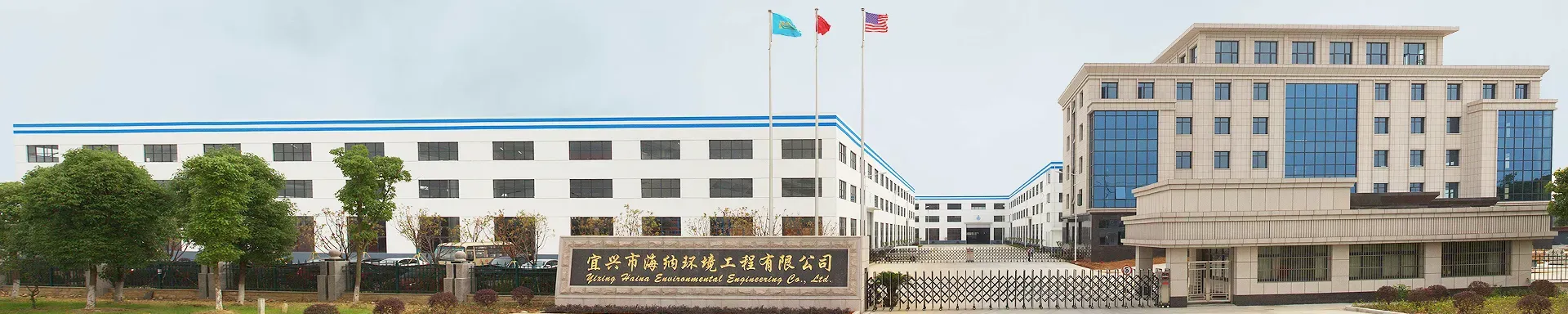
High-efficiency filter bags, like those engineered by Yixing Haina Environmental Engineering Co., Ltd, use a laminated ePTFE membrane or a nanofiber coating on the surface of a robust base fabric. This isn't just a coating for show—it's a barrier that stops particulate at the surface, not within the depth of the media. Particles form a cake on the outside, which is easily pulsed off during cleaning, so the bag maintains a low, stable pressure drop. In field trials on a 100 MW coal-fired boiler, switching to ePTFE membrane bags cut particulate emissions from 35 mg/Nm³ to under 5 mg/Nm³, meeting the strictest EU or Chinese standards. But the real kicker: the cleaning frequency dropped by 60%, extending bag life from 2 years to over 4. That's not just compliance—that's a direct hit to your bottom line.
Pain Point #2: Acid Dew Point Corrosion
Here's a killer that's not always visible: sulfuric acid condensation. When you burn fuels with sulfur content—coal, heavy oil, even biomass with high chlorine—the flue gas contains SO2 and SO3. As the gas cools below the acid dew point (typically 120-150°C), sulfuric acid condenses on your bags and in the baghouse. The acid attacks the fibers, especially if you're using polyester or acrylic. You'll see bags turning brittle, cracking, and losing their tensile strength. Within months, you're dealing with pinhole leaks that let particulate bypass, ruining your emissions compliance. Worse, the acid corrodes the baghouse casing and hoppers, leading to structural repairs that cost six figures.
Solution: PTFE and Acid-Resistant Fiber Blends
Yixing Haina's high-efficiency bags often use a base fabric of PTFE, PPS, or a blend like P84/PPS, which are engineered to withstand continuous operating temperatures up to 260°C and resist acid attack down to a pH of 1. But it's not just the fiber—it's the construction. The bags are designed with a PTFE membrane that is chemically inert, so acid droplets bead up and roll off rather than soaking into the media. In a biomass boiler in Scandinavia, where chlorine-induced corrosion is a nightmare, switching to PTFE membrane bags with a PPS substrate eliminated bag failures due to acid attack. The plant reported a 100% reduction in bag replacement over 18 months, and the baghouse inspection showed no signs of corrosion on the cages or the bags themselves. The key is matching the fiber chemistry to your specific fuel and operating profile—something a knowledgeable supplier like Haina does through a thorough fuel analysis before recommending a bag design.
Pain Point #3: Energy Waste from High Pressure Drop
Let's talk about the silent thief: pressure drop. Every inch of water column across your baghouse is energy you're paying for—it's the load on your ID fan, which is often one of the largest auxiliary power consumers in a boiler plant. A baghouse with dirty, clogged bags might have a pressure drop of 8-10 inches W.C. compared to a clean system at 3-4 inches. That extra 5 inches means your fan is working harder, consuming more electricity, and potentially limiting boiler output. On a 50 MW boiler, that can translate to an extra 200 kW of fan power, costing you over $100,000 per year in electricity alone. And if you're forced to derate the boiler to keep the fan from tripping, you're losing revenue from reduced steam production.
Solution: Optimized Cleaning Cycles and Surface-Loading Media
The high-efficiency bags from Haina are designed with a smooth surface that allows for efficient pulse-jet cleaning. Because the dust cake doesn't penetrate deeply, the cleaning pulse removes the cake with less energy and less frequent pulses. This directly lowers your compressed air consumption (another hidden cost) and keeps the pressure drop stable. In a case study at a chemical plant in Texas, retrofitting with these bags reduced the pulse-jet cleaning frequency from every 5 minutes to every 15 minutes, saving an estimated $35,000 per year in compressed air and fan energy. Additionally, the lower pressure drop allowed the plant to increase boiler load by 5%, adding valuable production capacity without any capital investment in the fan.
Real-World Proof: Customer Success Stories
You don't have to take my word for it. Here are three clients who transformed their operations with high-efficiency filter bags from Yixing Haina Environmental Engineering Co., Ltd.
Case 1: Coal-Fired Power Plant in Ohio, USA
Background: A 200 MW plant burning high-sulfur bituminous coal was facing EPA fines for particulate emissions exceeding 0.03 lb/MMBtu. Their existing fiberglass bags were failing every 18 months due to acid attack.
Solution: Haina replaced 1,200 bags with ePTFE membrane bags on a PPS substrate, along with optimized cage design.
Results: Particulate emissions dropped to 0.008 lb/MMBtu—a 73% reduction. Bag life extended to 5 years, and maintenance costs fell by $180,000 annually. Plant manager John Miller said, "These bags are the first that have lasted a full overhaul cycle. We've cut our bag replacement costs in half, and we finally have a margin of safety with the EPA."
Case 2: Biomass District Heating in Denmark
Background: A district heating plant burning wood chips and straw was struggling with high moisture and chlorine content, causing bags to blind and corrode within 6 months.
Solution: Haina supplied PTFE membrane bags with a PTFE felt substrate, designed for high humidity and low-temperature operation.
Results: The bags maintained a stable pressure drop below 5 inches W.C. for over 2 years. The plant reduced its auxiliary power consumption by 12%, and there were zero unscheduled shutdowns due to bag failure. Operations Director Lars Jensen commented, "The difference is night and day. We used to dread the winter season—now we don't even think about the baghouse."
Case 3: Heavy Oil Refinery in Saudi Arabia
Background: A refinery boiler burning heavy fuel oil with high vanadium and sulfur content was experiencing catastrophic bag failures due to high temperatures and corrosive ash.
Solution: Haina implemented high-efficiency bags with a P84 needle felt and a special high-temperature PTFE membrane.
Results: The bags withstood continuous operation at 220°C without degradation. Emissions stayed below 10 mg/Nm³, and bag life exceeded 3 years. Maintenance supervisor Khalid Al-Ahmad said, "We had accepted that bag replacement was an annual event. Now we plan for every three years, and our environmental compliance is the best in the region."
Where Do These Bags Shine? Applications and Partnerships
High-efficiency filter bags are not a one-size-fits-all product. They're engineered for specific applications, and Haina has a track record of collaborating with boiler OEMs and engineering firms to integrate their solutions from the ground up. Key applications include:
- Coal-fired utility and industrial boilers (pulverized coal, circulating fluidized bed)
- Biomass and waste-to-energy boilers
- Recovery boilers in pulp and paper
- Petroleum coke and heavy oil boilers
- Incineration plants for hazardous waste
Haina has partnered with major boiler manufacturers like B&W, Foster Wheeler, and Chinese giants like Harbin Electric, ensuring that their filter bags are specified in original equipment. They also work directly with plant owners for retrofits, offering on-site baghouse audits and custom solutions. For example, a recent collaboration with a European engineering firm led to the design of a bespoke baghouse for a 300 MW ultra-supercritical boiler, achieving a guaranteed outlet emission of less than 5 mg/Nm³.
FAQ: Your Burning Questions, Answered
Q1: What is the difference between a high-efficiency filter bag and a regular bag?
A: A high-efficiency bag typically has a microporous membrane or nanofiber coating that captures sub-micron particles on the surface, whereas a regular bag relies on depth filtration, allowing particles to penetrate the media. This results in higher filtration efficiency (99.99% at 0.3 microns), lower pressure drop, and better cleaning performance.
Q2: How do I choose the right filter bag material for my boiler?
A: The choice depends on your flue gas temperature, chemical composition, and particulate characteristics. For high temperatures (above 200°C), PTFE or PPS are options. For acid gas presence, PTFE or P84 are preferred. You should always conduct a flue gas analysis and work with a supplier like Haina to run a pilot test if possible.
Q3: Can I retrofit my existing baghouse with high-efficiency bags without major modifications?
A: In most cases, yes. High-efficiency bags are designed to fit standard baghouse dimensions. However, you may need to adjust your pulse-jet cleaning system settings (pressure, duration) to optimize performance. Haina provides technical support for retrofits, including a review of your cleaning system.
Q4: What is the typical lifespan of a high-efficiency filter bag?
A: In well-designed systems, a high-efficiency bag can last 4-5 years, compared to 1-2 years for standard bags. The lifespan depends on operating conditions, cleaning frequency, and fuel quality. Regular monitoring of pressure drop and emissions can help predict replacement needs.
Q5: Are high-efficiency filter bags more expensive? And is the ROI worth it?
A: The initial cost is higher, often 1.5-2 times that of standard bags. However, the total cost of ownership is lower due to extended bag life, reduced energy consumption, lower maintenance, and avoided fines. For example, a plant with 1,000 bags might pay $60,000 more upfront but save $150,000 over three years in energy and replacement costs. Plus, you gain peace of mind.
It's Time to Upgrade Your Thinking
You've seen the pain points, the solutions, and the proof. High-efficiency filter bags aren't just an expense—they're an investment in reliability, compliance, and profitability. With Yixing Haina Environmental Engineering Co., Ltd, you get a partner who understands the intricacies of boiler flue gas filtration and has the engineering expertise to deliver a solution tailored to your plant.
If you're ready to stop worrying about emissions and start focusing on production, the next step is simple. Download our comprehensive technical white paper, "Optimizing Filter Bag Performance in Industrial Boilers," which includes detailed selection criteria, case studies, and maintenance best practices. Or, better yet, schedule a consultation with our senior sales engineers. They'll visit your site, analyze your flue gas, and provide a detailed proposal within two weeks. Don't let another day of inefficiency slip by—your boiler—and your bottom line—will thank you.