

SDS Dry desulfurization - Sodium bicarbonate
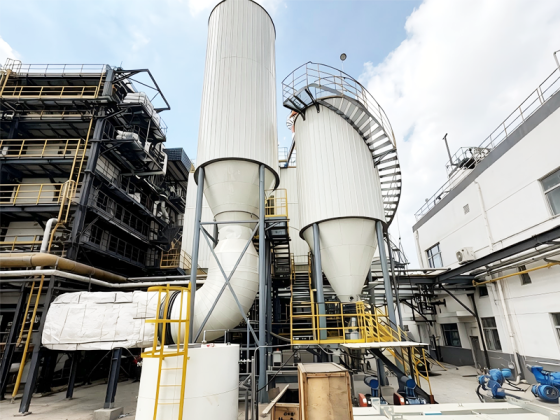
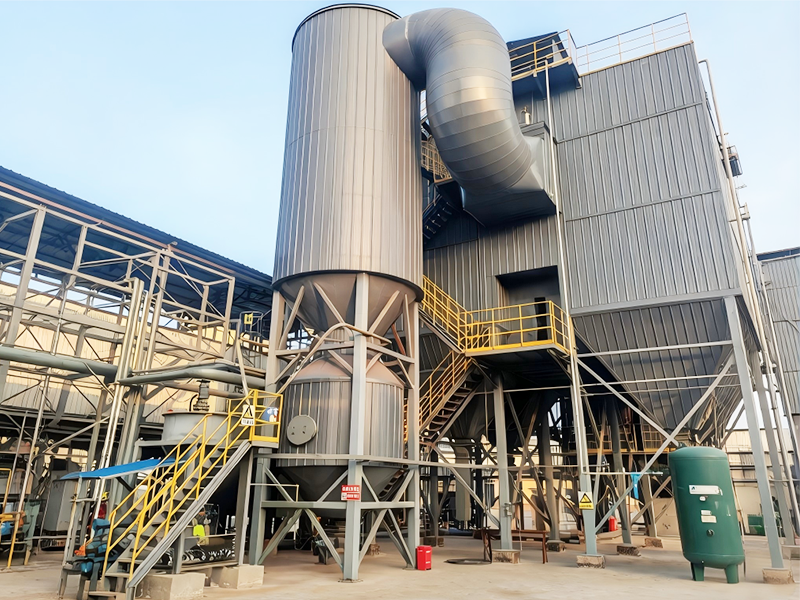
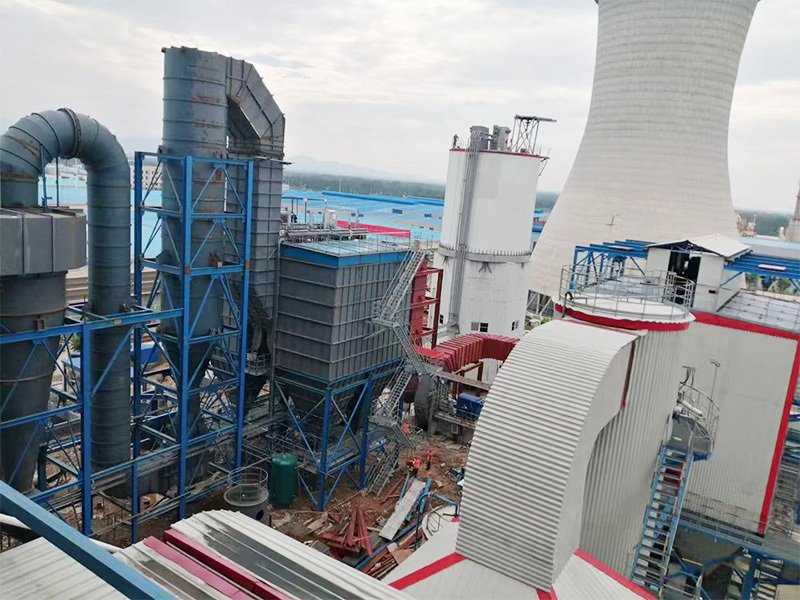
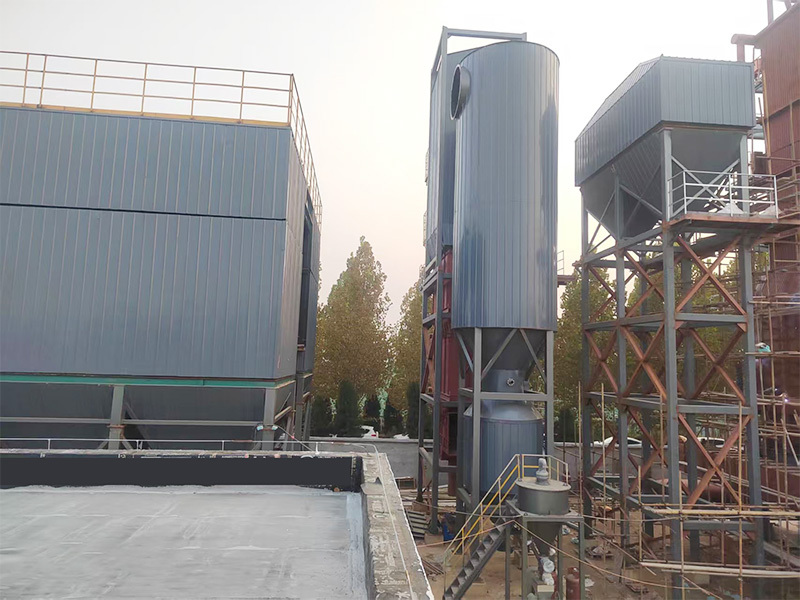
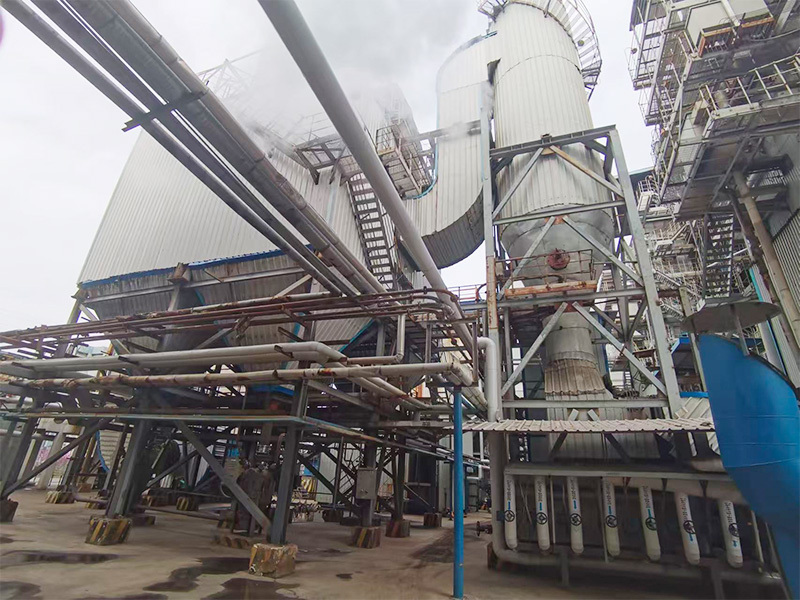
SDS dry desulfurization (Sodium - Based Dry Sorption Desulfurization) is a mature all - dry desulfurization process, which has been widely used in flue gas desulfurization in many industries at home and abroad.
The core of SDS dry desulfurization - hydrated lime is to use calcium hydroxide (Ca(OH)₂, i.e., hydrated lime) as a desulfurizer to react chemically with acidic gases such as sulfur dioxide (SO₂) in the flue gas to produce dry by - products.
- Information
Product Overview
SDS dry desulfurization (Sodium - Based Dry Sorption Desulfurization) is a mature all - dry desulfurization process, which has been widely used in flue gas desulfurization in many industries at home and abroad.
The core of SDS dry desulfurization - hydrated lime is to use calcium hydroxide (Ca(OH)₂, i.e., hydrated lime) as a desulfurizer to react chemically with acidic gases such as sulfur dioxide (SO₂) in the flue gas to produce dry by - products.
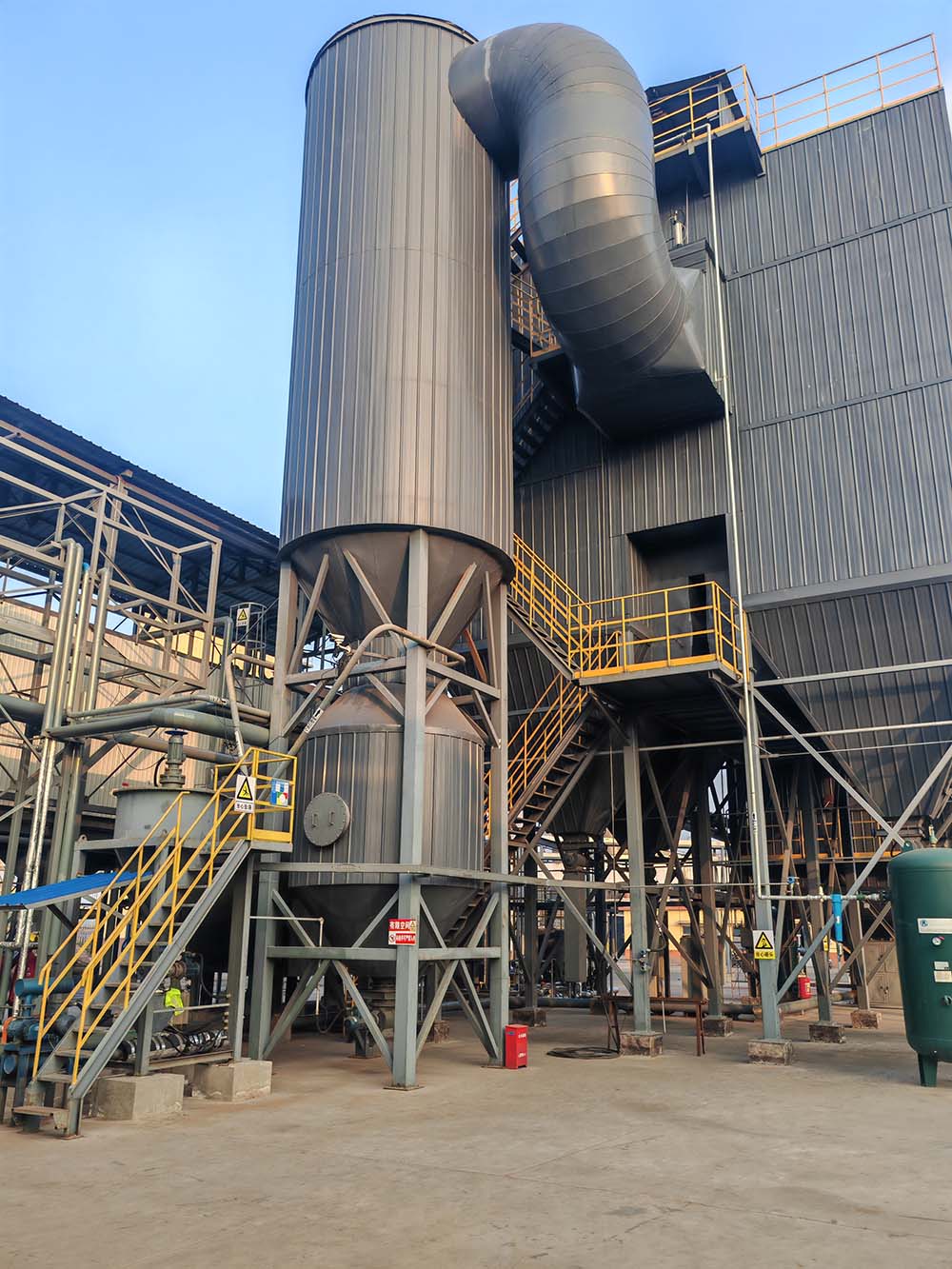
Working principle:
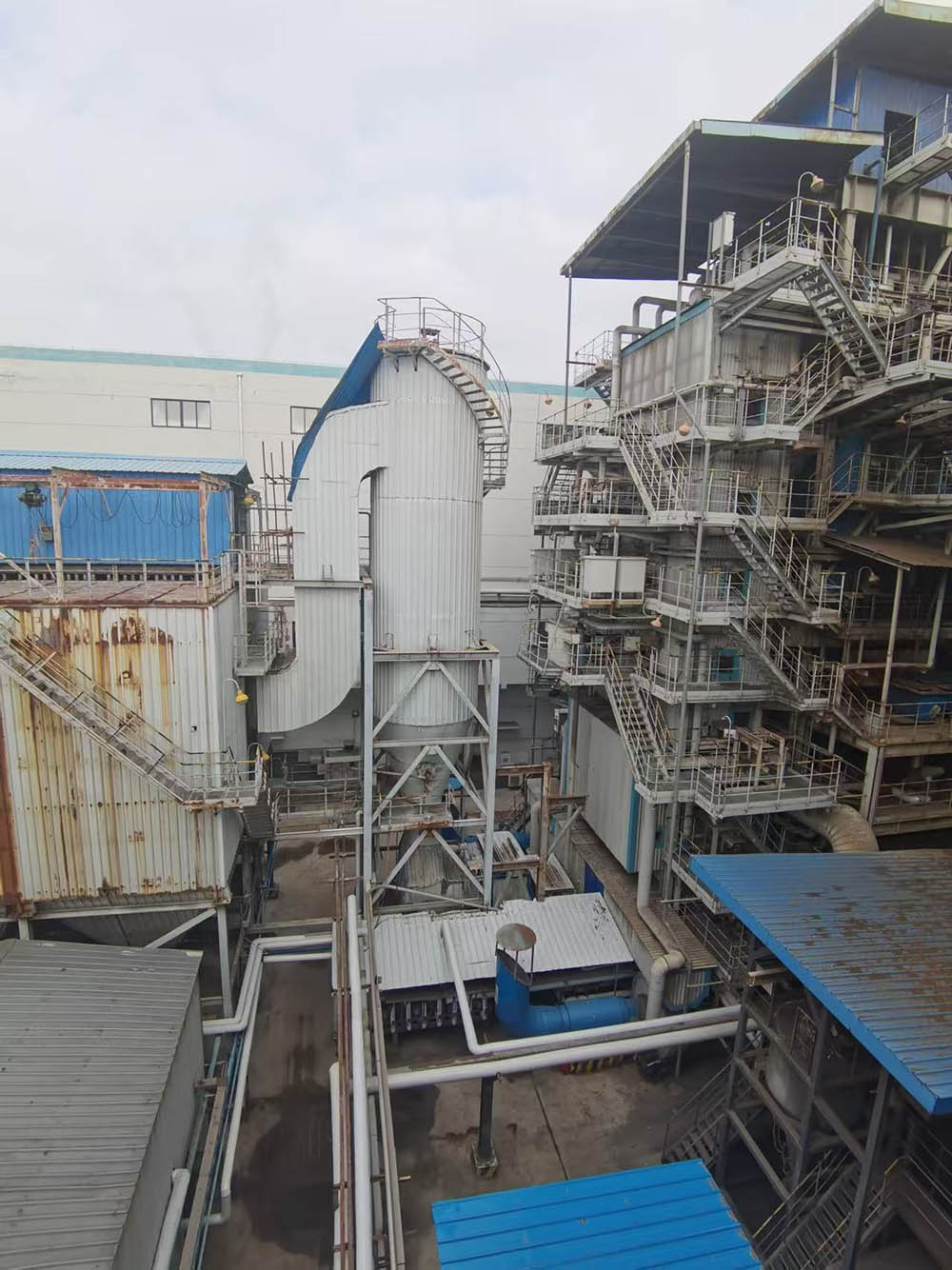
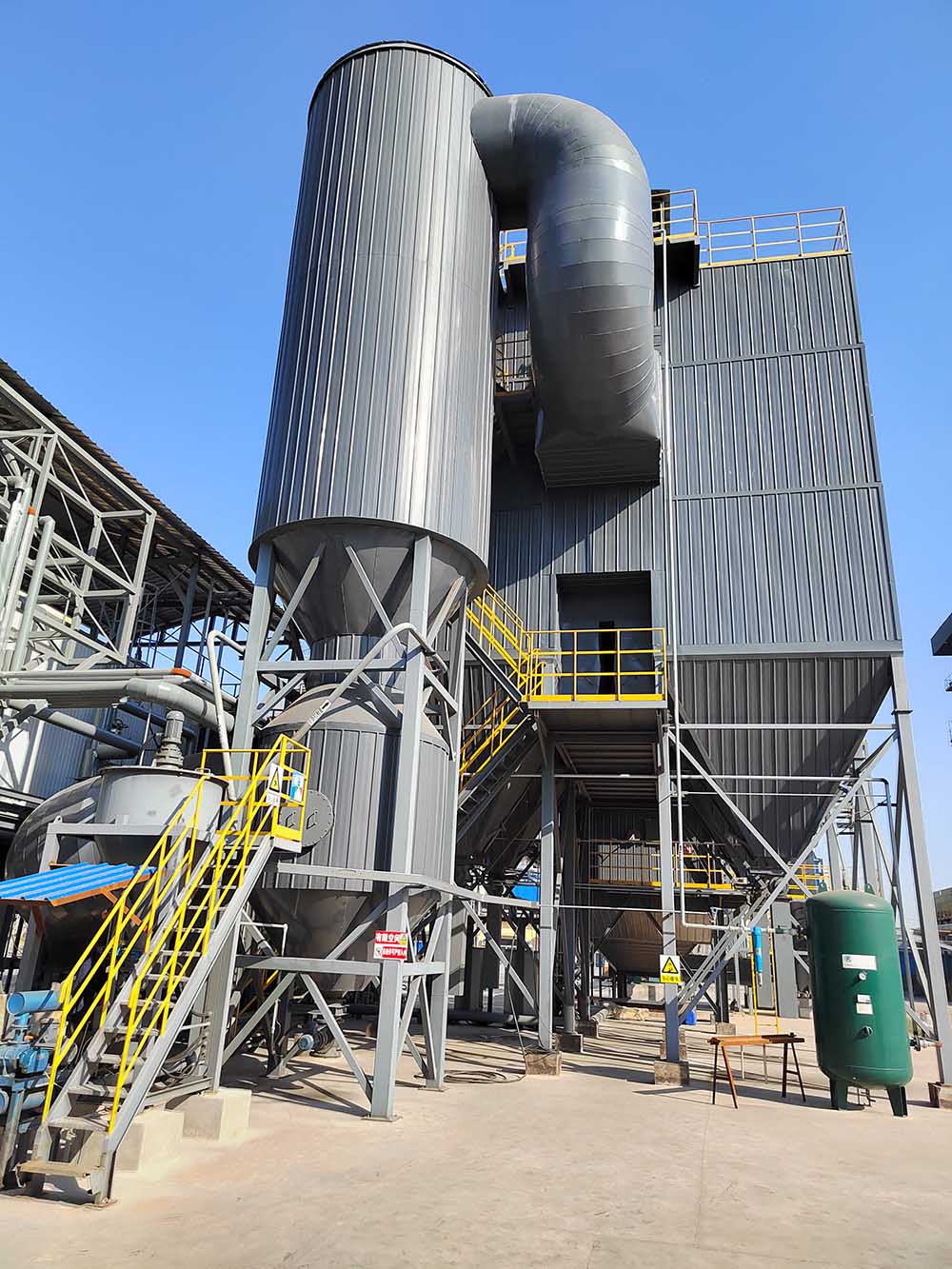
| SDS Process Flow | The desulfurizer used is hydrated lime. The 325-mesh calcium hydroxide powder is transported to the plant and manually fed into the powder silo. A hopper is installed below the powder silo, and a variable-frequency controlled quantitative feeder is set below the hopper. Then, it is conveyed to the flue at the bag filter inlet by a conveying fan. In the flue, the flue gas and sodium bicarbonate are mixed and react at a high mass transfer rate to remove the acidic gases in the flue gas. |
| Reaction Principle | Ca(OH)₂ + SO₂ → CaSO₃·1/2H₂O + 1/2H₂O |
| 2CaSO₃·1/2H₂O + O₂ + 3H₂O → 2CaSO₄·2H₂O |
Advantages
· Low operating cost: The system has low resistance and low power consumption; and the one - time investment is relatively small.
· No white smoke problem: The temperature drop of the desulfurization system is low (about 10 - 20°C), and the exhaust gas temperature is high, so there is no need for additional treatment of the "chimney rain" or "white smoke" phenomenon.
· Co - purification ability: It also has a high removal rate for acidic gases such as SO₃, HCl and HF.
· Flexible operation: It has strong adaptability to boiler load changes and can quickly adjust the injection amount of desulfurizer according to the SO₂ concentration.
Disadvantages
· By - product treatment: Although the by - products can be recycled, a small amount of desulfurization by - products will still be produced, which need to be properly collected and treated.
Frequently Asked Questions
1. There are two forms of dry desulfurization:
Direct injection into the flue, using the flue as a reactor;
Reaction in a tower reactor.
2. There are two design positions for dry desulfurization in the system:
When the initial concentration of sulfur dioxide is high, it is designed at the boiler outlet and the inlet of the multi - tube dust collector;
When the initial concentration of sulfur dioxide is low, it is designed at the inlet of the bag filter. This also depends on the temperature of the flue gas at the boiler outlet. The configuration of subsequent SCR denitrification should be considered because the load of industrial boilers varies greatly and the temperature is relatively low under low - load conditions.
3.Optimal reaction temperature:
Quicklime has good activity at 120 - 160°C, and the efficiency decreases when the temperature is lower than 120°C or higher than 160°C. Therefore, quicklime is better for high - dust layout, with the device inlet temperature < 160°C and low reagent cost.
Why Choose Us
| Basic Information | Established | 1995 |
| Registered Capital | RMB 68 million | |
| Annual Output Value | Over RMB 200 million | |
| Scale | Total Employees | 150 |
| Manufacturing Area | 35,000 ㎡ | |
| Project Experience | Total Engineering Projects | Nearly 500 |
| Denitrification Systems Delivered | ~3,000 units | |
| Dust Removal Systems Delivered | ~10,000 units | |
| Desulfurization Systems Delivered | ~5,000 units | |
| Wet Electrostatic Systems Delivered | ~250 units | |
| Technology | Patents | 50+ |
| Market Coverage | Export Regions | Africa, South America, Southeast Asia |
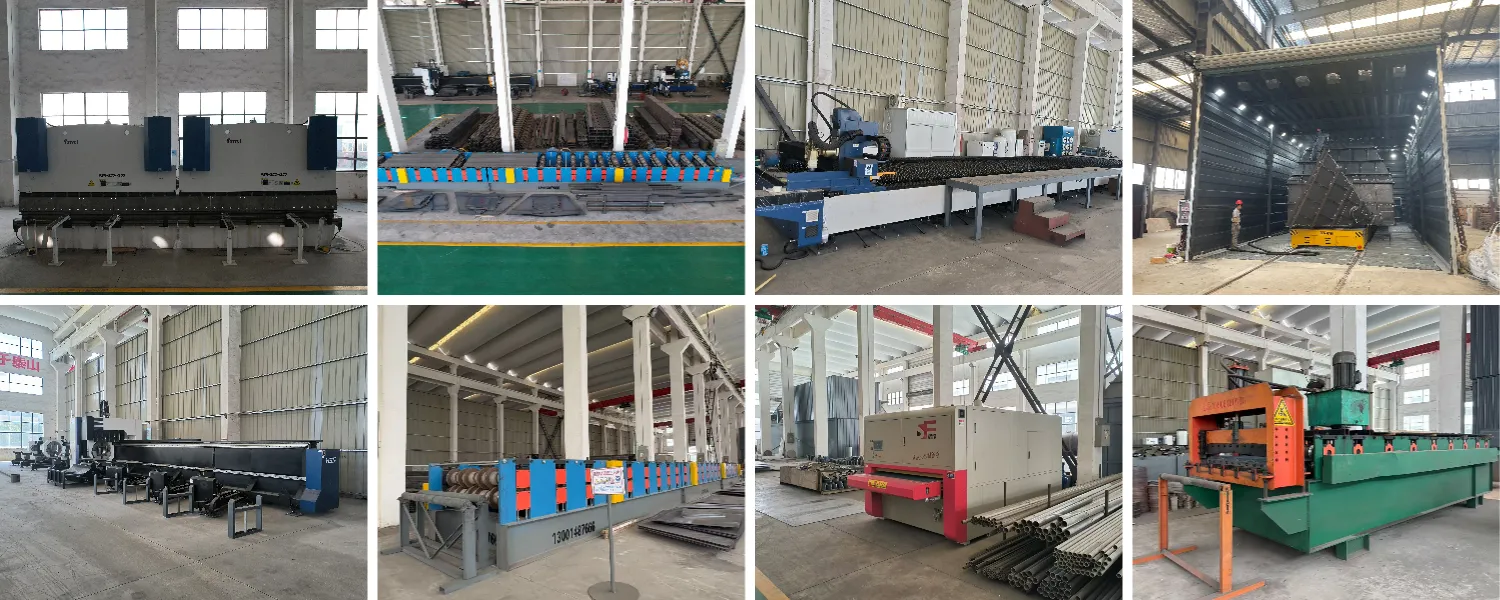
Manufacturing & Production Capacity
After-Sales Service
Haina provides on-site installation, commissioning and technical training.Regular follow-up inspections are arranged after project delivery to support long-term operation stability.
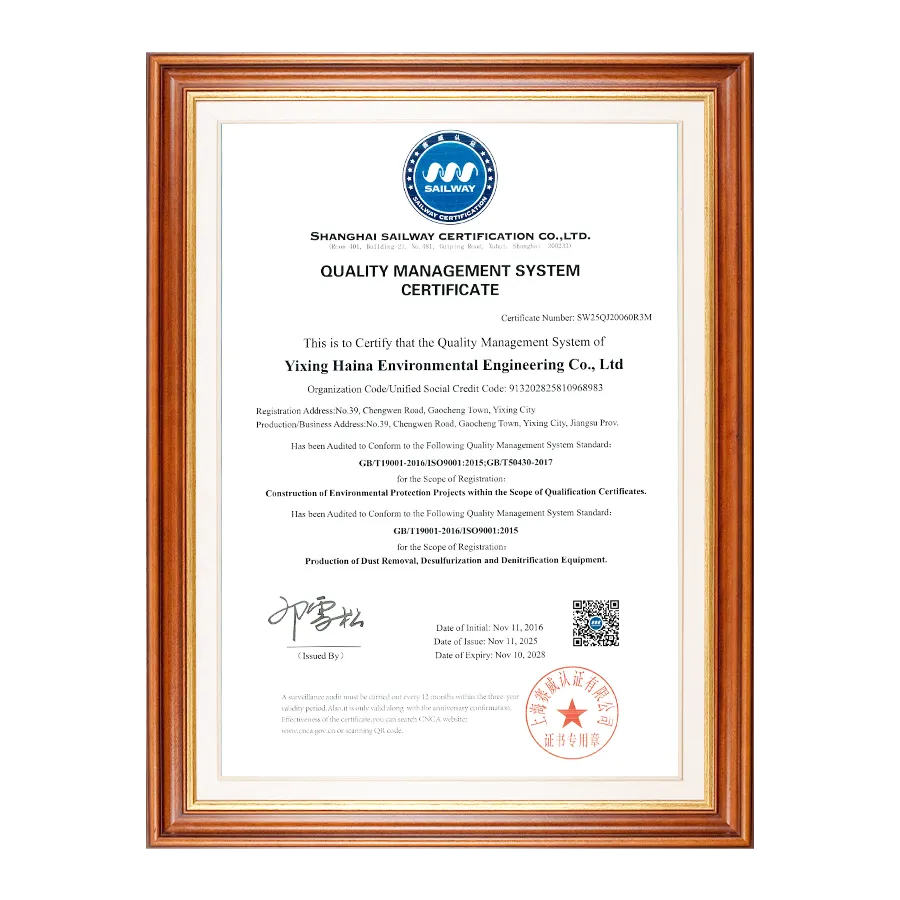
Quality Management SystemCertification Certificate |
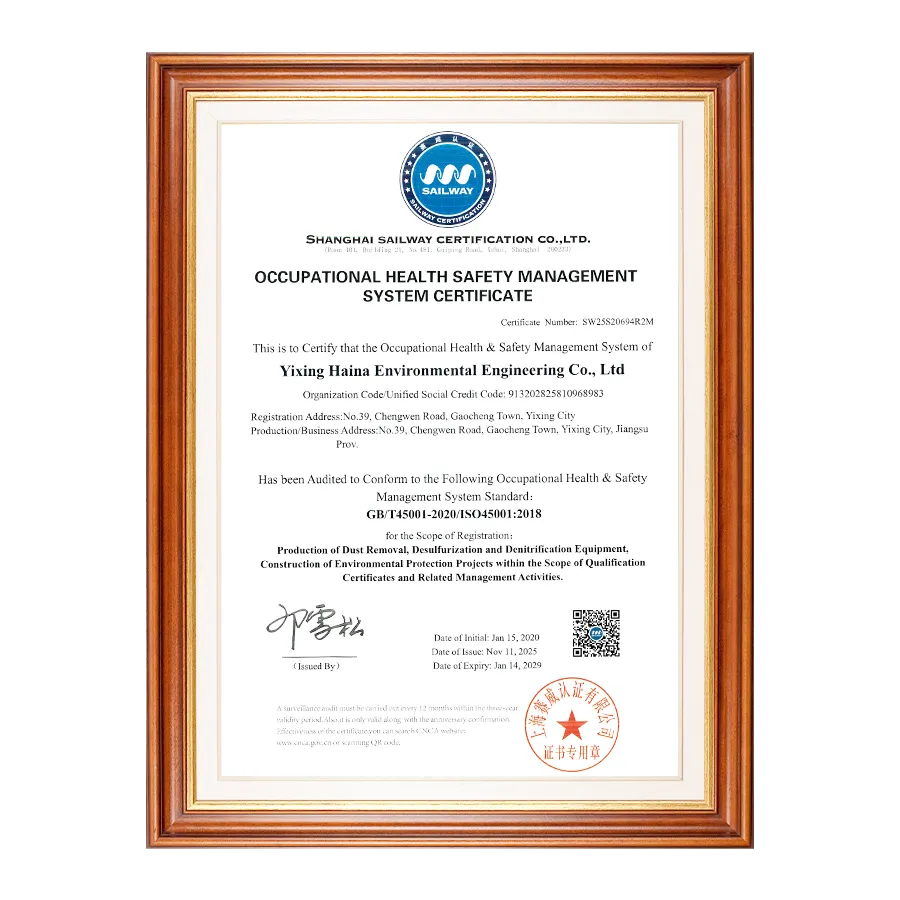
Occupational Health and Safety Management System Certification Certificate |
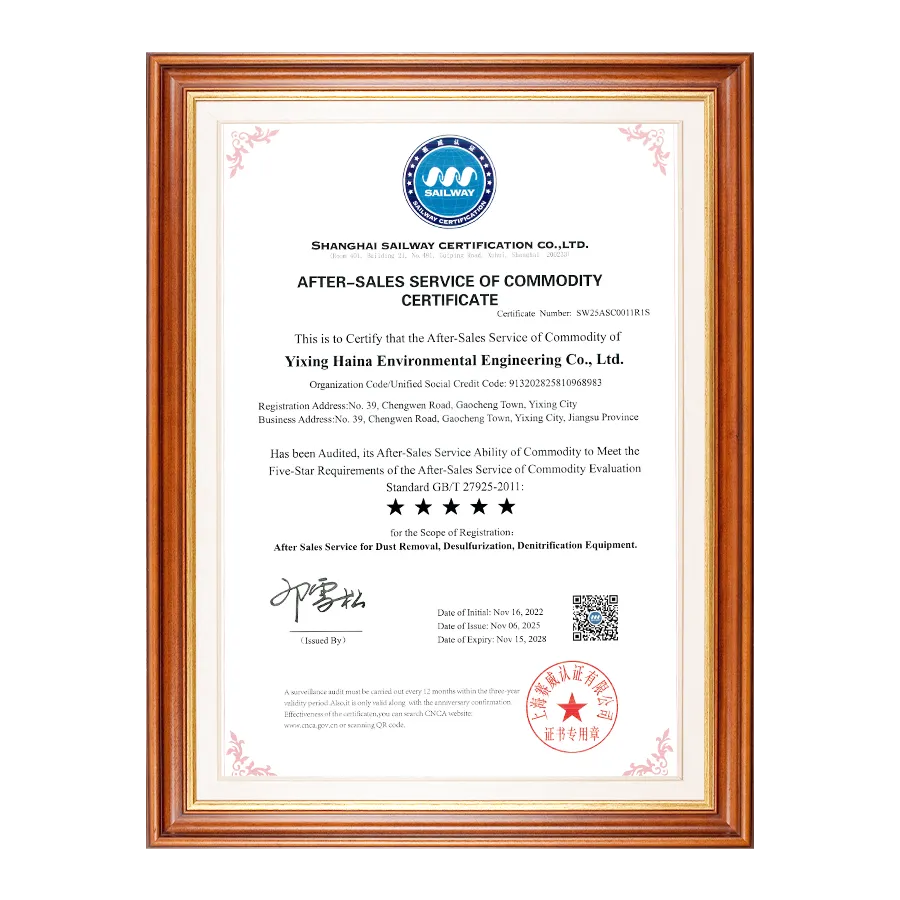
Certificate of After-Sales Service Certification for Products |
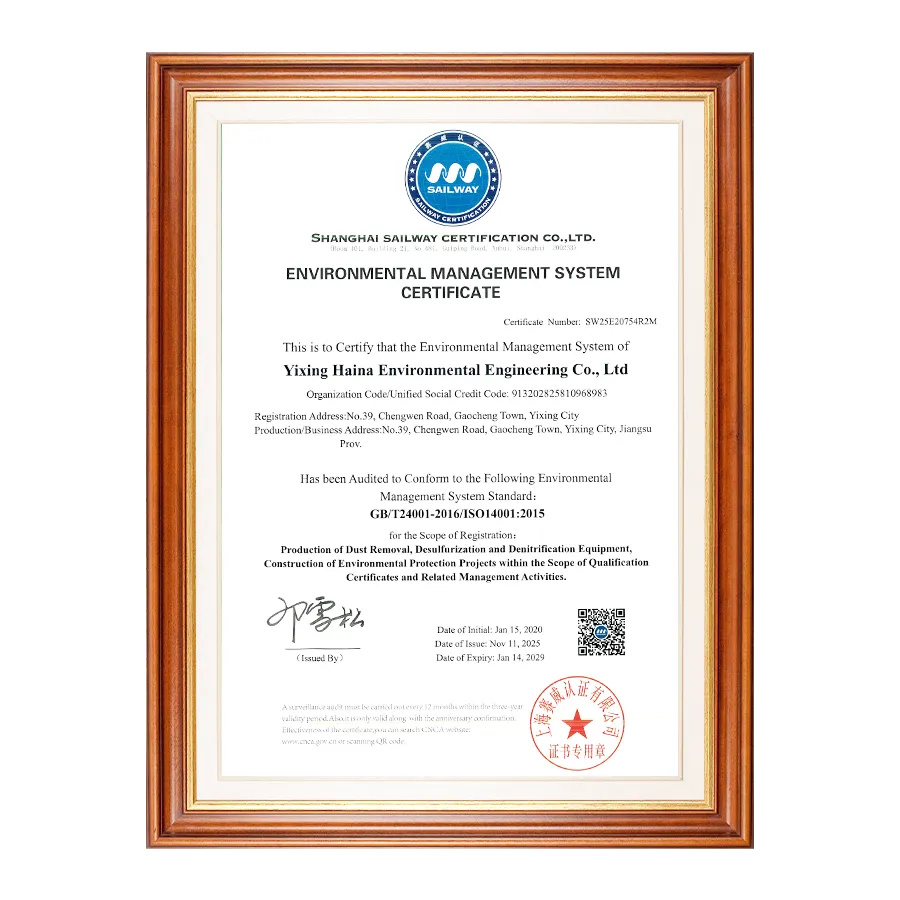
Environmental Management System Certification Certificate |