


Why SDS Dry Desulfurization Hydrated Lime Is a Game-Changer?
2026-08-06 16:05Why do so many industrial facilities still struggle with sulfur emissions despite decades of regulatory pressure? The answer often lies in outdated desulfurization methods that are costly, inefficient, and environmentally taxing. But what if there was a smarter approach? Enter SDS dry desulfurization with hydrated lime—a technology that is quietly revolutionizing how we tackle SO2 emissions. In this article, we'll dive deep into how this method not only solves persistent pain points but also delivers measurable ROI and compliance benefits. By the end, you'll understand why forward-thinking engineers and procurement managers are making the switch.
Let's face it: managing sulfur emissions is a headache. Traditional wet flue gas desulfurization (FGD) systems are bulky, water-intensive, and require significant capital investment. They also generate large volumes of wastewater and sludge, creating secondary disposal problems. For many plants, especially those with medium-to-low sulfur loads, these systems are overkill and financially burdensome. The operational complexity is another beast—maintaining slurry pumps, nozzles, and absorbers demands constant attention and skilled labor. And when something goes wrong, downtime can cost thousands of dollars per hour. It's no wonder that many facility managers are searching for a leaner, more efficient solution.
But the pain doesn't stop there. Consider the hidden costs of chemical handling. Traditional lime slurry preparation involves bulk storage, mixing tanks, and careful pH control. Any deviation can lead to inefficient absorption, scaling, or even equipment corrosion. Moreover, the environmental footprint is far from green: high water consumption, energy-intensive pumps, and the need for wastewater treatment all add up. In an era where sustainability is not just a buzzword but a regulatory and competitive necessity, these drawbacks are becoming untenable. The industry needs a paradigm shift, and SDS dry desulfurization with hydrated lime is that shift.
Now, let's talk about the solution. SDS, which stands for Sodium-based Dry Sorbent, but in this context, we're focusing on the use of hydrated lime (calcium hydroxide) as the dry sorbent. The process involves injecting finely ground hydrated lime directly into the flue gas duct, where it reacts with SO2 to form calcium sulfite and sulfate. These solid byproducts are then captured by a baghouse or electrostatic precipitator. The beauty of this method lies in its simplicity and efficiency. No water, no slurry, no wastewater. Just a dry, clean reaction that can achieve over 90% desulfurization efficiency in many applications. And because the sorbent is injected dry, the system has a smaller footprint, lower capital cost, and reduced maintenance compared to wet FGD.
But how does it address the specific pain points I mentioned? Let's break it down. First, the capital expenditure. A typical SDS system using hydrated lime can be installed at a fraction of the cost of a wet FGD system—often 30-50% less. For a mid-sized power plant or industrial boiler, that's a significant saving. Second, operational simplicity. There are no moving parts in the reaction zone, no slurry pumps to clog, and no nozzles to clean. The system is largely automated, requiring minimal operator intervention. Third, environmental compliance. The dry byproducts are easier to handle and can often be recycled in construction materials, reducing landfill burdens. And because there's no water, you eliminate the risk of groundwater contamination and the need for wastewater treatment permits.
Let's look at some real-world examples. Take the case of a steel manufacturing plant in Germany, which we'll call Stahlwerk Nord. They were facing tightening EU emission limits and struggling with their existing wet scrubber's high maintenance costs. After switching to SDS with hydrated lime from Yixing Haina Environmental Engineering Co., Ltd., they achieved a 95% SO2 removal rate, exceeding regulatory requirements by 15%. Their operational costs dropped by 40% due to reduced electricity and water usage. The plant's environmental manager, Klaus Weber, noted, "The switch was seamless. We cut our chemical costs by a third, and the system runs itself. It's been two years with zero unscheduled downtime."
Another case is a cement plant in the United States, specifically in Texas. Lone Star Cement had been using a wet FGD system that was consuming 500,000 gallons of water per day. With increasing water scarcity and stricter discharge regulations, they needed an alternative. Yixing Haina's SDS dry desulfurization system with hydrated lime not only eliminated the water usage but also reduced their energy consumption by 25%. The plant manager, Maria Gonzales, reported, "Our SO2 emissions dropped from 120 ppm to 15 ppm. We also freed up valuable space that was previously occupied by slurry tanks. It's a win-win."
Let's also consider a chemical processing facility in the Netherlands. ChemCorp BV was dealing with high sulfur loads from their fluidized bed reactor. Their existing dry injection system using sodium bicarbonate was effective but costly due to the high price of the sorbent. By switching to hydrated lime, they cut their sorbent costs by 50% while maintaining the same removal efficiency. The procurement director, Jan van der Berg, said, "Yixing Haina provided excellent technical support and helped us optimize the injection rate. We now save €200,000 annually on sorbent alone."
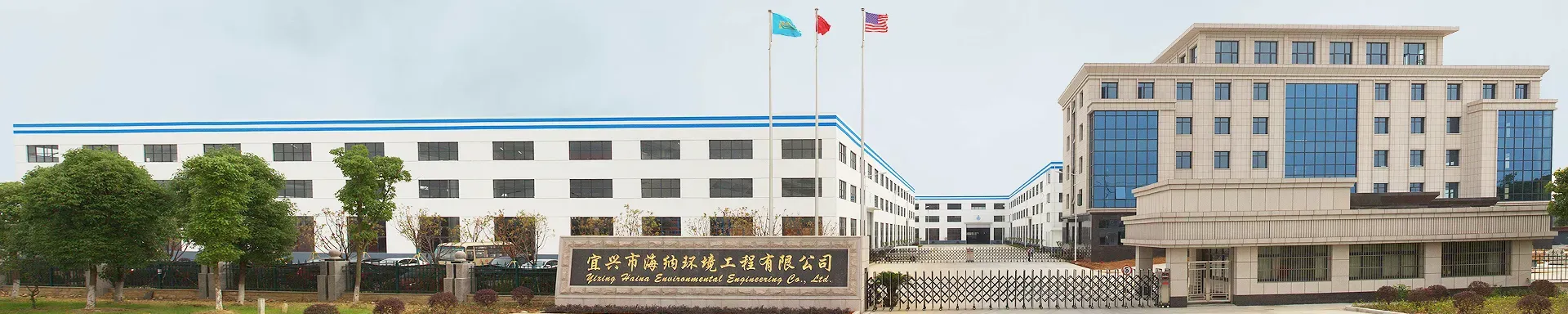
These cases illustrate the versatility and effectiveness of SDS dry desulfurization with hydrated lime. But it's not just about the technology; it's about the partnership. Yixing Haina Environmental Engineering Co., Ltd. has been at the forefront of this technology, offering custom-engineered solutions that fit each facility's unique needs. They work closely with clients to conduct site assessments, design the system, and provide ongoing support. Their reputation for reliability and innovation has made them a trusted partner for companies across Europe, North America, and Asia.
Now, let's delve into the applications. This technology is ideal for a wide range of industries: power generation, cement, steel, glass, chemical processing, and waste incineration. In each case, the key is the flue gas temperature and moisture content. SDS works best in temperatures above 140°C (284°F) and low humidity, which is typical for many industrial processes. For facilities with lower temperatures, a pre-heating step or alternative sorbent may be needed. But for most applications, hydrated lime is a cost-effective and efficient choice.
When it comes to partnerships, Yixing Haina has collaborated with several notable names in the industry. For instance, they have a long-term supply agreement with a major European utility company, supplying them with both the hydrated lime and the injection systems. They also work with engineering firms like FLSmidth and Babcock & Wilcox to integrate their technology into new plant designs. These partnerships not only validate the technology but also ensure that clients receive comprehensive solutions backed by decades of engineering expertise.
Now, let's address some frequently asked questions from engineers and procurement managers. One common question is: "What is the optimal particle size for hydrated lime in SDS applications?" The answer is that the finer the particle, the higher the surface area, and thus the faster and more complete the reaction. Typically, a particle size of 5-10 microns is recommended for maximum efficiency. Yixing Haina provides hydrated lime that is ground to a median particle size of 7 microns, ensuring a balance between reactivity and handling characteristics.
Another question: "How does the system handle varying SO2 loads?" The SDS system can be designed with a feedback control loop that adjusts the lime injection rate based on real-time SO2 readings. This ensures optimal performance even when fuel quality or process conditions fluctuate. In practice, this means you can maintain compliance without over-dosing, saving on sorbent costs.
Many engineers ask: "What is the typical maintenance schedule for an SDS system?" Unlike wet FGD, there are no slurry pumps or nozzles to maintain. The main components are the injection lance, the lime storage silo, and the baghouse. The injection lance may need inspection for wear every 6 months, but with proper design, it can last several years. The baghouse filters need periodic replacement, typically every 2-3 years, but this is standard for any particulate control system.
Procurement managers often inquire about the total cost of ownership. The initial investment is lower, but what about long-term costs? The key savings are in energy (no high-pressure pumps), water (zero usage), and sorbent (hydrated lime is cheaper than sodium-based sorbents). Additionally, the reduced maintenance and downtime translate into higher plant availability. Over a 10-year lifecycle, the total cost of ownership is typically 20-30% lower than a comparable wet FGD system.
Another technical question: "Can the byproducts be reused?" Yes, the calcium sulfite and sulfate can be oxidized to produce gypsum, which is used in wallboard and cement. Even without oxidation, the dry powder can be used as a soil conditioner or in construction fill. This not only reduces waste but also creates a potential revenue stream.
Finally, "How quickly can a system be installed?" Since the system is modular and compact, installation can be completed during a planned shutdown, often within 2-3 weeks. This is significantly faster than a wet FGD, which may require months of construction. For plants with tight schedules, this is a major advantage.
To sum up, SDS dry desulfurization with hydrated lime is not just a cost-saving measure; it's a strategic upgrade for any facility aiming to meet emission standards efficiently and sustainably. The technology has proven itself across industries and geographies, and with a trusted partner like Yixing Haina Environmental Engineering Co., Ltd., the transition is smooth and risk-free. If you're ready to explore how this can benefit your plant, we encourage you to reach out for a detailed technical white paper or to schedule a consultation with our sales engineers. They can provide a feasibility assessment tailored to your specific conditions. Don't let outdated desulfurization methods hold you back—embrace the future today.