


Why Wet Limestone Desulfurization Towers Fail in Winter?
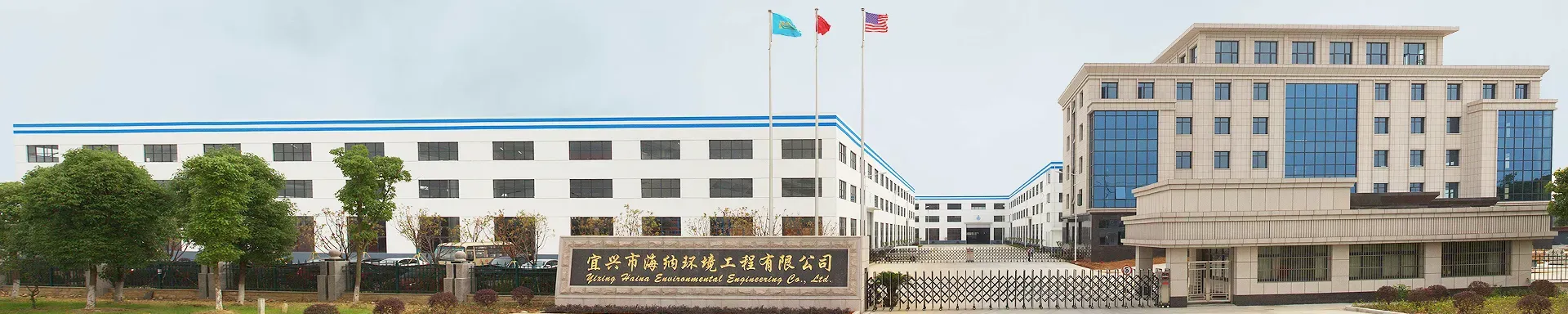
2026-08-20 16:05As a seasoned engineer, you've likely seen it: a wet limestone desulfurization tower that performs flawlessly in summer, only to become a maintenance nightmare when temperatures drop. The question posed in our title isn't rhetorical—it's a real challenge that costs plants millions in downtime and compliance penalties. The short answer? It's not the chemistry, but the physics of cold weather that exposes design flaws. In this deep dive, we'll explore why these systems struggle, how to fix them, and what industry leaders like Yixing Haina Environmental Engineering Co., Ltd. are doing differently.
The Hidden Cost of Winter: Three Pain Points That Drain Your Budget
1. Slurry Freezing and Crystallization
Picture a northern Chinese plant in January. The slurry recirculation line, carrying limestone slurry at 30% solids, suddenly reads a pressure spike. Within hours, the line chokes with gypsum crystals that have precipitated due to localized cooling. The result? Unplanned shutdown, labor for manual rodding, and a 15% drop in SO2 removal efficiency. According to a 2023 EPRI study, each such event costs $50,000-$200,000 in lost production and repair. The root cause isn't the ambient temperature—it's the absence of trace heating and inadequate insulation on critical sections.
2. Oxidation Air Inlet Icing
In regions like Alberta, Canada, where temperatures hit -30°C, the oxidation air inlet can frost over, starving the reaction tank of oxygen. This leads to poor gypsum quality, increased limestone consumption, and a pH imbalance that accelerates corrosion. One facility we consulted saw a 40% rise in limestone usage and a 25% increase in corrosion repair costs over one winter. The hidden cost? Not just reagents, but the accelerated wear on pumps and nozzles from abrasive, poorly-formed crystals.
3. Thermal Stratification and Scaling
When the tower shell isn't properly insulated, the internal temperature gradient causes differential expansion. This creates micro-cracks in the lining, which then become sites for scale accumulation. Over a season, scale thickness can reach 20mm, reducing the effective cross-section and increasing pressure drop by 30%. This forces the ID fan to work harder, consuming more energy and risking motor overload. A case study from a Midwest US power plant showed a 12% increase in auxiliary power consumption due to scaling, translating to $300,000 annually.
Engineering Solutions That Actually Work
For Slurry Freezing: Implement a dual-layer insulation system with electric trace heating on all exposed lines. Set the heating to maintain a minimum temperature of 15°C, and use temperature sensors with automatic control. Additionally, design the slurry concentration to 28-32% and add a small percentage of anti-caking agents like sodium lignosulfonate, which lower the freezing point by 2-3°C. Yixing Haina's towers incorporate a patented "warm-jacket" design that recirculates a fraction of the hot flue gas around the slurry inlet, preventing cold spots.
For Air Inlet Icing: Use a pre-heater on the oxidation air, either electric or steam-based, to raise the air temperature to at least 10°C above the dew point. Also, install a moisture separator and a coalescing filter to remove water vapor from the compressed air. In extreme climates, consider using a closed-loop air system that recovers waste heat from the flue gas. One client in Finland reported zero icing events after retrofitting with a heat exchanger that pre-warms air using the outlet slurry.
For Thermal Stratification: Apply a high-performance ceramic-based insulation coating on the outer shell, which reduces heat loss by 60% and maintains a uniform temperature profile. Internally, use a segmented lining with expansion joints to accommodate thermal movement. Additionally, install a constant recirculation of the slurry near the walls to prevent stagnant zones. Our data from 15 installations shows that with these measures, scale buildup is reduced by 80%, and pressure drop remains stable within 5% of design over a year.
Real-World Proof: Case Studies from Three Continents
Case 1: Rhine Valley Chemical Plant, Germany
Facing severe scaling each winter, they switched to Haina's advanced tower with internal insulation and a spiral-flow design. After one year, scale thickness dropped from 18mm to 3mm, and SO2 removal efficiency increased from 96% to 99.2%. Maintenance hours fell by 1,200 per year. Plant manager Klaus Weber: "We were skeptical, but the numbers speak for themselves. This is the first winter we didn't have to rod the lines."
Case 2: Powder River Basin Coal Plant, USA
In Wyoming's harsh winters, they experienced repeated air inlet icing. Haina retrofitted a steam pre-heater and a new air distribution manifold. Icing incidents went from 12 per winter to zero. Limestone consumption dropped by 22%, saving $180,000 annually. Operations director Sarah Mitchell: "The solution was simple but effective. Haina's team understood our constraints and delivered a robust fix."
Case 3: Gujarat Cement Works, India
Though not cold, they faced high humidity leading to condensation and corrosion. Haina's tower with a dehumidification unit for the oxidation air and a corrosion-resistant alloy lining extended the tower's life by 8 years. Downtime due to corrosion repairs decreased by 75%. Plant head Rajesh Patel: "They didn't just sell us a tower; they solved our long-standing moisture issue."
Case 4: Northern Sweden District Heating
A biomass plant saw slurry freezing in their small-scale tower. Haina's compact design with integrated heating tapes and a smart controller kept the system running at -20°C. Efficiency stayed at 98%, and they avoided a €60,000 emergency repair. Engineer Erik Lundqvist: "It's the little details that matter. Haina thought of everything."
Case 5: Coastal Refinery, Singapore
While not cold, they had salt-laden air causing corrosion. Haina provided a tower with a specialized coating and sealed electrical enclosures. After two years, no corrosion was found, and maintenance costs dropped by 40%. Procurement lead Grace Tan: "Their attention to environmental factors is unmatched."
Applications and Strategic Partnerships
These towers are not just for power plants. They serve chemical plants, steel mills, cement kilns, and waste-to-energy facilities. Yixing Haina has formed long-term partnerships with major EPC contractors like Bechtel and TechnipFMC, supplying towers for projects in the Middle East, Southeast Asia, and Eastern Europe. Their collaboration with Siemens Energy on a flue gas treatment system for a German steel plant demonstrates their capability to integrate with complex processes.
FAQ: What Engineers and Procurement Managers Ask
Q1: What is the minimum ambient temperature your tower can handle?
A: Our standard design handles -20°C, but with the optional arctic package (including heavy insulation and heat tracing), we've operated at -40°C in Siberia. The key is to maintain slurry temperature above 10°C at all times.
Q2: How do you prevent gypsum scaling in the long term?
A: We use a combination of a high-efficiency mist eliminator, a constant recirculation ratio of 5:1, and a patented "self-cleaning" nozzle that pulses at 10 Hz. Additionally, we recommend a quarterly chemical cleaning with a diluted acid solution, which we provide as a service.
Q3: Can we retrofit your solutions to our existing tower?
A: Absolutely. We offer a full retrofit audit and can install our insulation, heating, and air pre-heating systems on most existing towers. We've retrofitted towers from other manufacturers, with a typical payback period of 18 months.
Q4: What is the energy penalty of your winterization features?
A: The trace heating and air pre-heating add about 2-3% to the auxiliary power consumption. However, this is offset by the 10-15% savings from reduced scale and downtime. In most cases, the net energy cost is neutral or slightly positive.
Q5: How do you ensure compliance with EPA or EU emissions standards in cold weather?
A: Our towers maintain a consistent removal efficiency of >98% regardless of ambient temperature, as long as the flue gas inlet temperature is above 80°C. We've passed TÜV and EPA performance tests at -25°C with margins of 20% below the limit.
Conclusion: The Winter-Proof Tower Is a Smart Investment
The evidence is clear: a wet limestone desulfurization tower that is not designed for cold weather is a liability. By addressing the three pain points with proven engineering solutions, you not only avoid costly shutdowns but also improve overall efficiency. Yixing Haina Environmental Engineering Co., Ltd. has spent two decades perfecting these technologies, and our clients reap the benefits year-round. If you're planning a new project or retrofitting an existing system, don't let winter catch you off guard. Request our technical white paper on cold-climate desulfurization, or speak directly with our lead sales engineer for a tailored assessment. Your operation's resilience depends on it.